
When a company discovers it’s under a ransomware attack, the problem doesn’t usually begin with the ransom note. By then, the attacker has already done much of the work. They’ve gained access, observed the system, escalated privileges, and, in many cases, prepared the ground for the widest possible impact.
What changes at that moment is not just the technical situation. The rhythm of the entire organization changes.
Systems that stop responding, equipment that can’t work, internal calls multiplying, pressure from management, operational uncertainty, and a question that immediately arises: what do we do now?
The first 24 hours often have a greater impact on the final outcome than the attack itself. Because what a company does—or fails to do—in those first few hours can make the difference between containing a crisis and amplifying it.
It’s not just about recovering systems. It’s about managing a situation that combines technical decisions, operational pressure, economic impact, and a huge need to act quickly without losing control.
And that, precisely, is what makes the first hours of an incident so difficult.
The first few hours don’t just determine the attack, they determine how much damage it will leave.
One of the biggest misconceptions surrounding ransomware is that the problem only begins when systems stop working. In reality, that moment is often when the organization becomes aware of something that has likely been developing silently for hours, days, or even weeks.
Understanding the anatomy of a ransomware attack helps to understand precisely this: encryption is often the last visible phase of a much longer chain that includes initial access, lateral movement, information theft, and attack preparation.
Therefore, when ransomware becomes visible, the company is no longer in the prevention phase.
It is in the response phase.
And responding poorly in those first few hours often has much deeper consequences than it seems.
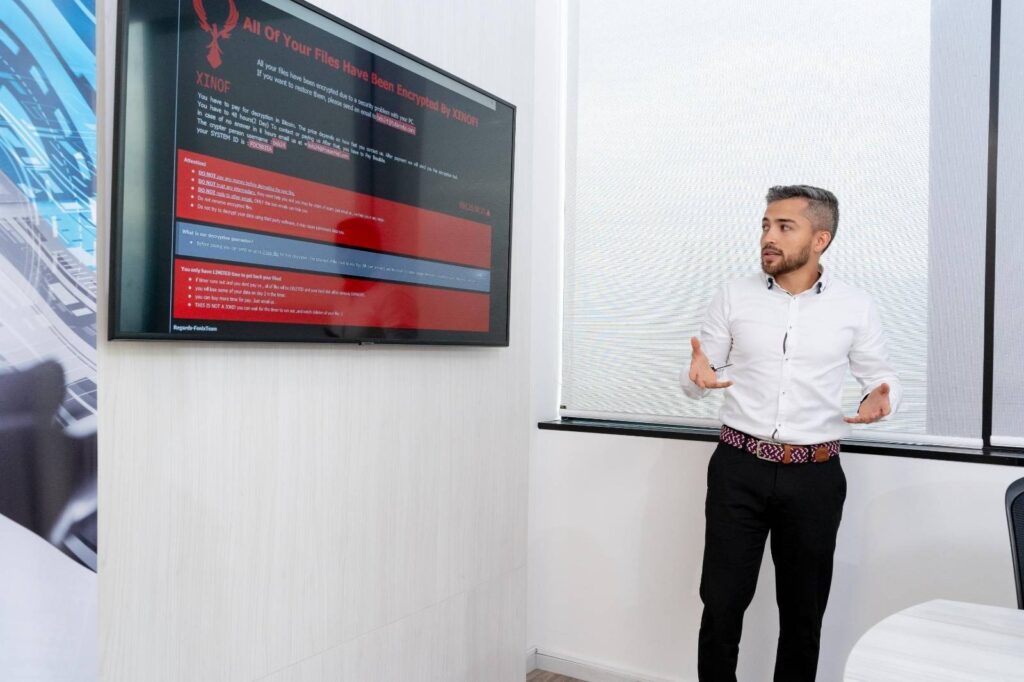
Immediate Ransomware Help
Don’t let ransomware hold your business hostage. Our experts are ready to recover your data and secure your systems.
The impulse to act quickly can be dangerous.
When an organization discovers that it is under attack, the first impulse is usually immediate: to shut down systems, disconnect equipment, restore backups, or try to “do something” to stop the problem as soon as possible.
It’s a human reaction. And also a dangerous one.
Because acting quickly doesn’t always mean acting well.
In many real-world incidents, some of the most damaging decisions weren’t made by the attacker, but by the company itself in the midst of the chaos. Premature restorations, arbitrary shutdowns, loss of evidence, or improvised actions ultimately hampered the investigation and amplified the impact.
That’s why many of the recommendations in ransomware guides and resources don’t focus on “doing things quickly,” but on first understanding what’s happening before addressing what seems urgent.
In ransomware, speed matters.
But speed without judgment usually comes at a high price.
Internal pressure multiplies the problem
The attack does not take place in a technical laboratory.
It happens within a company that still has customers, operations, billing, suppliers, employees, and a management that needs immediate answers.
While the technical team tries to contain the incident, other areas begin to notice the impact: stopped processes, blocked access, interrupted services, or delays that begin to affect the business.
At that moment, the technical incident becomes something much more complex: a real-time business crisis.
It is no coincidence that many companies affected by ransomware have subsequently pointed out that one of the most difficult moments was not the attack itself, but the lack of clarity in those first hours, when everyone needed answers and no one yet had a complete picture of what was happening.
That’s where ransomware stops being an IT problem.
And it becomes an organizational problem.
The first mistake: trying to recover before understanding
One of the most common mistakes in the first few hours is thinking that the priority is to recover as soon as possible.
The logic seems reasonable: if something isn’t working, it needs to be fixed.
But in ransomware, that logic can be profoundly wrong.
What’s visible isn’t always the whole problem.
When encryption appears, what is seen is only part of the incident.
What you don’t see can be just as or even more important: compromised access, stolen credentials, data exfiltration, still-active lateral movement, or systems that appear healthy but are also compromised.
ENISA itself, in its resources on awareness and management of cyber incidents, insists precisely on this idea: the visible incident does not always reflect the real extent of the compromise.
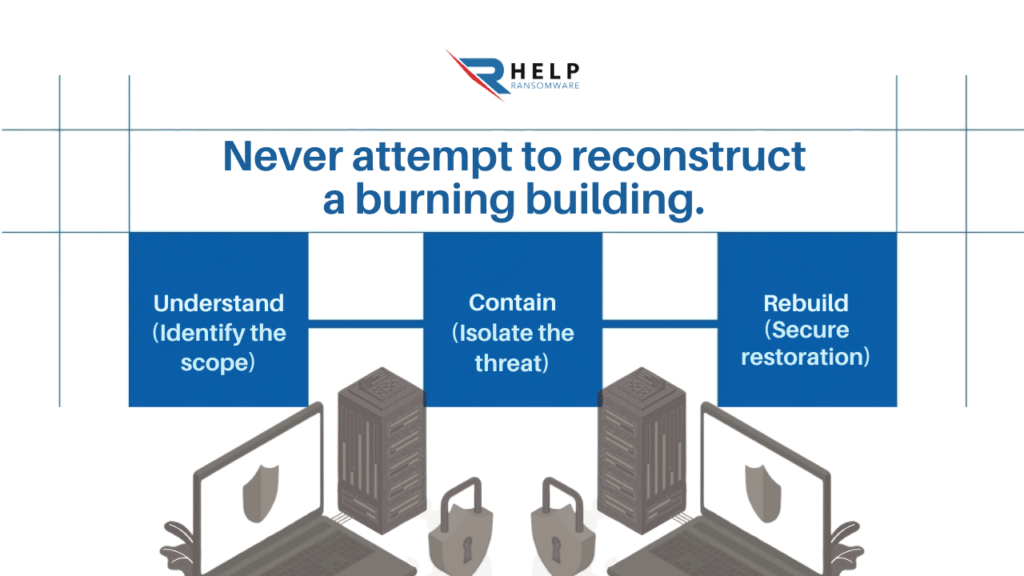
Therefore, restoring too soon can create a false sense of recovery while the attacker still has access or while the true extent of the attack has not yet been understood.
In ransomware, recovery is not the first priority.
The first thing is to contain.
Contain before rebuilding
A well-prepared company does not respond to impulse.
Respond to the analysis.
Isolating critical systems, understanding what is affected, limiting the attacker’s movement, and preserving visibility are far more important decisions than trying to return to normal too quickly.
Ransomware prevention strategy, because prevention doesn’t end when the attack occurs. It also involves knowing how to respond in a way that doesn’t multiply the impact.
The problem for many organizations is not that they lack technology.
They simply don’t have a clear strategy for making decisions under pressure.
The cost starts from the first minute.
There is another misconception: thinking that the economic cost of ransomware comes later.
No.
It begins the moment the organization loses operational capacity.
Every hour has a real impact.
When a company cannot operate normally, the damage begins to accumulate immediately.
Stalled processes, delayed sales, breaches of contract, unproductive hours, blocked services, internal burnout, and decisions made under pressure.
Analyzing the cost of ransomware in companies allows us to understand something that many organizations discover too late: the ransom is rarely the biggest cost.
The most expensive part is usually the interruption.
And that interruption begins long before there is a decision about whether or not to pay.
Every hour of uncertainty has a price.
And that price increases when the first decisions are not made well.
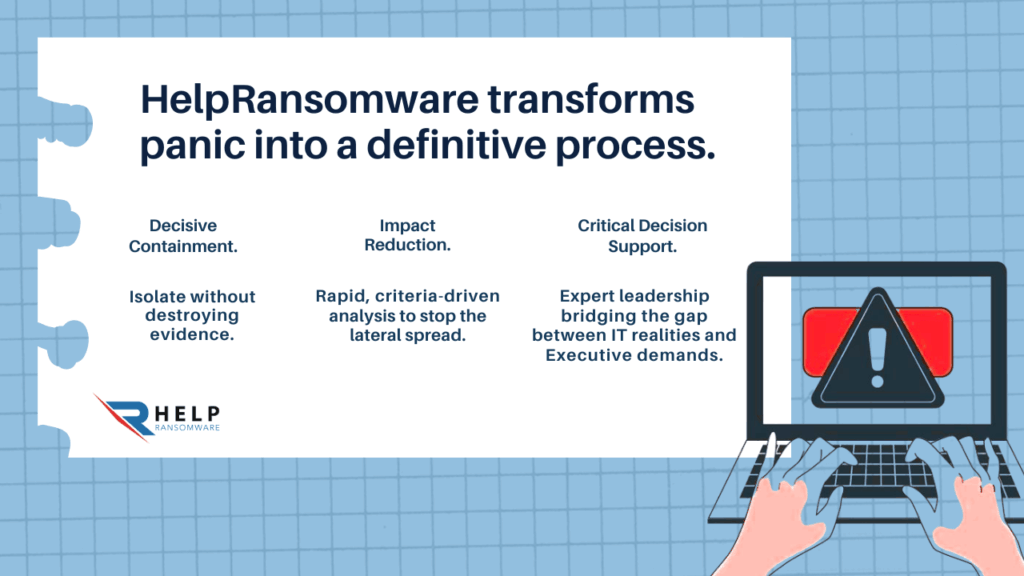
The reputational impact also begins during those hours
Many companies still think of ransomware as a purely technical crisis.
But the impact begins long before the incident becomes public.
A customer who doesn’t receive service, a supplier who detects delays, an internal team that loses confidence, or poorly managed communication are damages that begin to build from the very first moment.
Yourself from ransomware involves more than just blocking the attack.
It also involves understanding how to respond without adding more damage than necessary.
Because in many cases, reputation is not lost through the attack.
It’s lost because of how it’s managed.

Expert Ransomware Removal
Our certified professionals have over 25 years of experience in ransomware removal, data recovery, and computer security.
Preparation doesn’t begin when the attack occurs.
The first 24 hours are not the time to improvise.
And yet, many companies discover at that moment that they do not have clear protocols, defined responsibilities, or shared criteria for making decisions.
Knowing who’s in charge when everything else fails
One of the biggest problems in a ransomware crisis is not technical.
It’s organizational.
IT wants to contain the situation. Operations wants to get back on track. Management wants answers. Communications needs to know what to say.
Without clear leadership, chaos is amplified.
Therefore, part of preventing ransomware in companies involves not only deploying tools, but also defining who decides, how the incident is escalated, and what priorities exist when everything stops working.
A poorly managed technical crisis often turns into a much bigger crisis.
Safety is also about human preparedness
The CCN-CERT, in its report on good password management practices, reminds us of something important: many incidents start with small errors that seem minor, but can escalate quickly.
However, the real problem is not just how the attack begins.
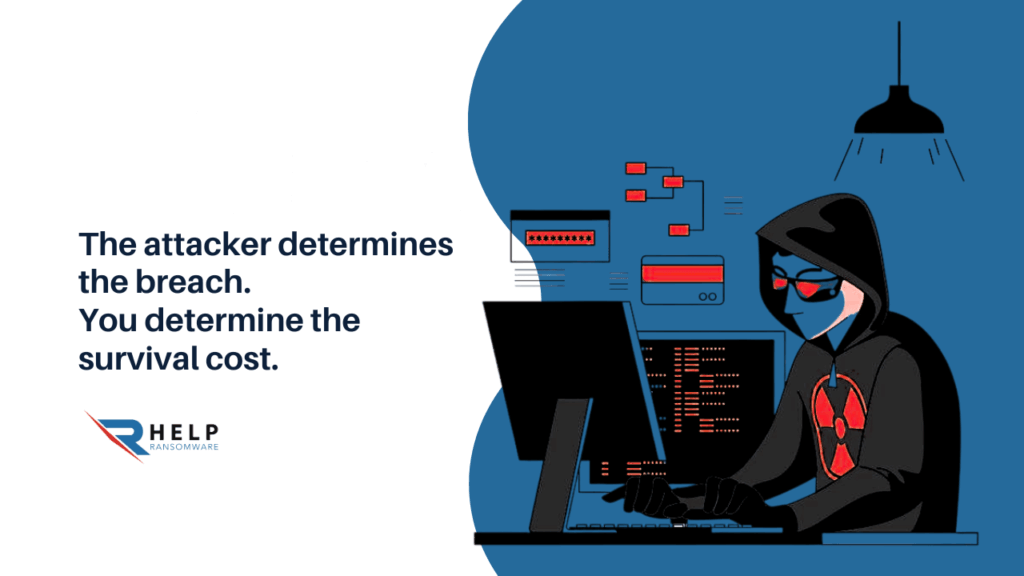
It’s how the organization responds once it’s already inside.
Because technology protects.
But preparation reduces the damage.
The first few hours of a ransomware attack determine everything that follows.
At HelpRansomware, we work to help you respond intelligently, reduce the impact, and make critical decisions when it matters most.
Conclusion
A ransomware incident is not defined solely by the attacker’s capabilities.
It is also defined by the victim’s ability to respond.
The first 24 hours are crucial for making many of the decisions that will determine the operational, economic, and reputational impact of the attack. During these hours, acting quickly is vital, but acting without clarity can worsen the problem.
Companies that understand this do not eliminate the risk.
But they do reduce the damage.
Because in ransomware, the first few hours don’t alone decide the incident.
They decide how much it will cost to overcome it.
Frequently Asked Questions (FAQ)
Should I shut down all systems first?
Not always. It depends on the scope and the containment strategy.
Does it need to be restored immediately?
No. First, we need to understand the incident.
Who should lead the response?
There must be a clear structure between IT, management, and operations.
Are the first few hours really that important?
Yes. Many critical decisions are made during that period.
Can a company prepare for this?
Yes, with protocols, simulations, and prior strategy.