Ransomware no longer depends solely on highly technical groups capable of developing malware from scratch. It is now part of an organized criminal economy in which different actors buy access, rent tools, share profits, and pressure victims through encryption, data theft, and public extortion.
In this environment, ransomware as a service has become one of the most serious threats facing businesses, CISOs, and IT leaders.
The model is simple: developers create the ransomware and its infrastructure; affiliates carry out the attacks; and both parties share the profits. The result is a threat that is more scalable, harder to attribute, and accessible to criminals with limited technical expertise.

Expert Ransomware Removal
Our certified professionals have over 25 years of experience in ransomware removal, data recovery, and computer security.
What Is Ransomware as a Service?
Ransomware as a service, also known as RaaS, is a criminal model in which operators develop a ransomware strain and make it available to affiliates to carry out a ransomware attack.
These affiliates do not need to build the malware themselves. They gain access to ready-made tools, control panels, payment infrastructure, and extortion channels.
The U.S. Department of Justice explained in 2025 that ALPHV/BlackCat operated under a ransomware-as-a-service model in which developers created and updated the ransomware, maintained the illicit infrastructure, and affiliates targeted high-value institutions.
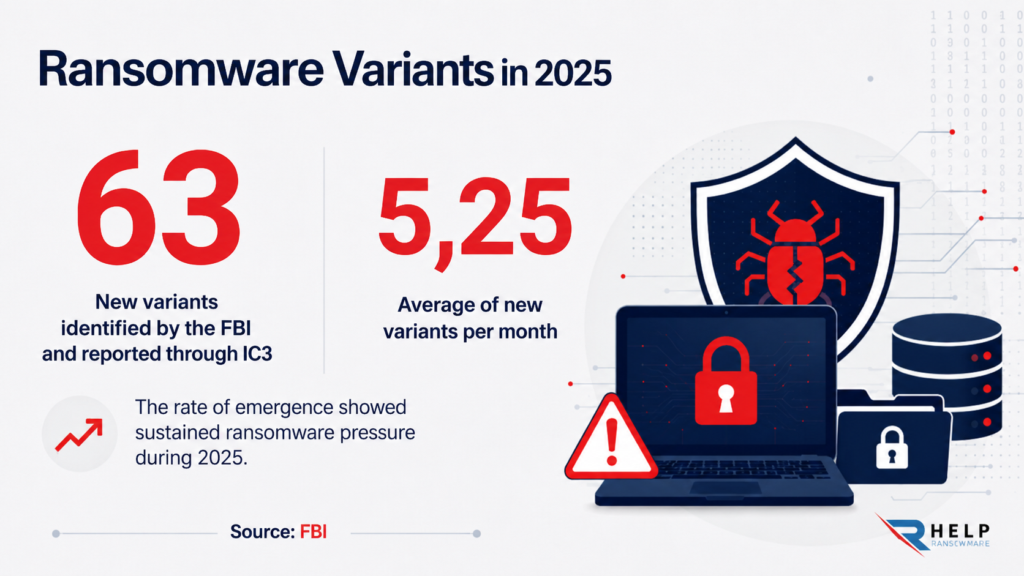
The impact of this model is already visible in official data. Through the IC3, the FBI reported that it received more than 3,600 ransomware complaints in 2025, with losses exceeding $32 million.
RaaS should therefore not be understood simply as a virus, but as a digital criminal franchise. The operator maintains the technology and the brand, while the affiliate identifies victims, compromises access, and deploys the malicious payload. For a business, this means an attacker does not need advanced cryptography skills to trigger an operational crisis.
How the RaaS Criminal Business Model Works
The ransomware as a service model divides an attack into specialized functions. Operators develop the malware, manage data leak sites, maintain control panels, and oversee part of the infrastructure.
Affiliates are responsible for gaining access to the network, escalating privileges, moving laterally, stealing information, and executing the encryption.
This division of labor makes the ecosystem more resilient. Even when a law enforcement operation disrupts a specific brand, its affiliates can migrate to another platform, reuse stolen access, or switch criminal service providers.
A company is therefore not facing a single malware strain, but an entire criminal supply chain.
The same Department of Justice statement on ALPHV/BlackCat explains that developers and affiliates shared the ransom after a victim made a payment.
This profit-sharing structure explains why the RaaS model is so attractive to cybercriminals: it lowers the technical barrier, distributes responsibilities, and makes it possible to scale attacks quickly.
Why Ransomware as a Service Increases Business Risk
The main danger of ransomware as a service is that it lowers the barrier to entry for cybercrime. In the past, an advanced attack required technical expertise, dedicated infrastructure, and malware development experience.
Today, an affiliate can purchase access, use ready-made tools, and rely on underground services to launch a campaign.
This multiplies the number of actors capable of targeting companies. It also makes defense more difficult because the same ransomware family may be used by different affiliates with different techniques and objectives.
For this reason, a modern cybersecurity strategy for businesses must recognize that ransomware now operates as an ecosystem. Blocking malicious files is not enough. Companies must protect remote access, credentials, backups, endpoints, critical servers, and sensitive data.
Immediate Ransomware Help
Don’t let ransomware hold your business hostage. Our experts are ready to recover your data and secure your systems.
RaaS, Double Extortion, and Data Leaks
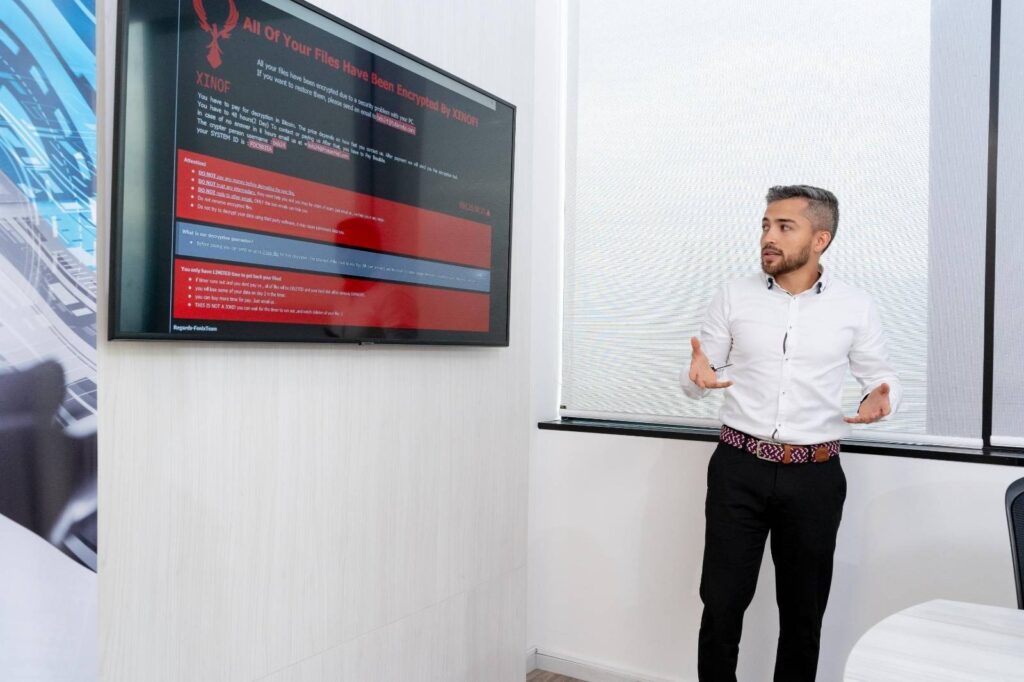
Modern ransomware rarely stops at encryption. Many groups use double extortion: they first steal information and then encrypt systems. If the victim refuses to pay, the attackers threaten to publish the data on leak sites or sell it through underground markets.
In 2026, the Department of Justice stated that individuals linked to ALPHV/BlackCat used ransomware to lock critical systems, steal sensitive data, and pressure companies into paying to regain access to their information.
This model turns a ransomware attack into a business continuity, privacy, reputational, and regulatory compliance crisis. Even when a company restores its systems from backups, it may still face data exposure, media pressure, and legal obligations.
Recent Cases: ALPHV/BlackCat and Medusa
Recent official cases demonstrate that ransomware as a service is not a theoretical concept, but a documented criminal structure. In 2025, the Department of Justice stated that ALPHV/BlackCat had targeted more than 1,000 victims worldwide and that affiliates paid administrators a share of each ransom in exchange for access to the ransomware and extortion platform.
Another significant case is Medusa. In 2025, CISA described Medusa as a ransomware as a service variant and reported that, as of February of that year, its developers and affiliates had affected more than 300 victims across critical infrastructure sectors.
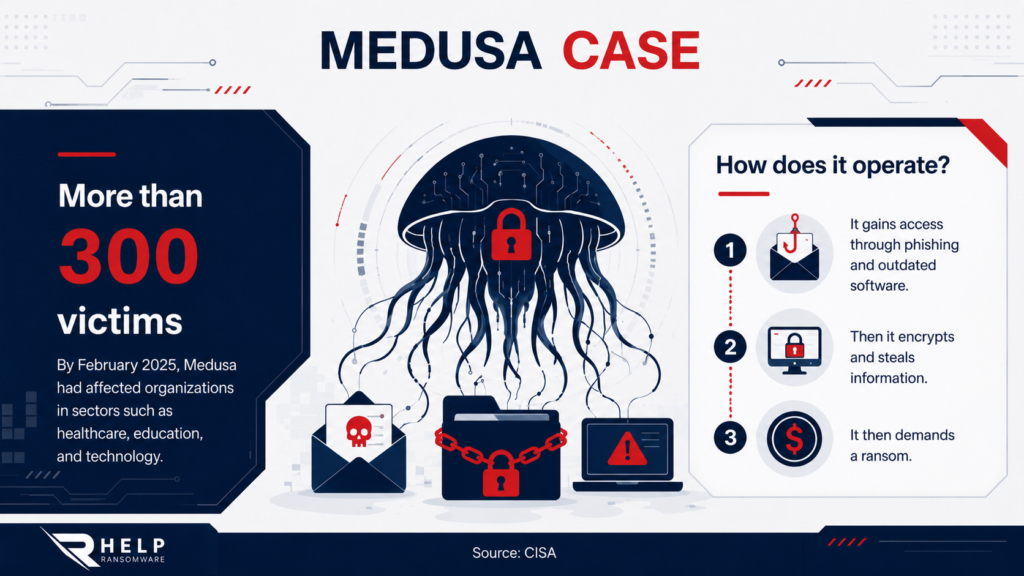
These cases reflect two common characteristics of RaaS: developers maintain the criminal infrastructure, while affiliates carry out attacks against organizations. For businesses, the risk lies not only in a specific malware family, but in how easily the model can be replicated.
How RaaS Enters a Corporate Network
Ransomware-as-a-service affiliates commonly exploit familiar attack vectors, including phishing, stolen credentials, exposed services, misconfigured remote access, vulnerable VPNs, and unpatched software.
Once inside, they attempt to escalate privileges, disable defenses, identify critical servers, exfiltrate information, and deploy encryption when the potential impact is greatest.
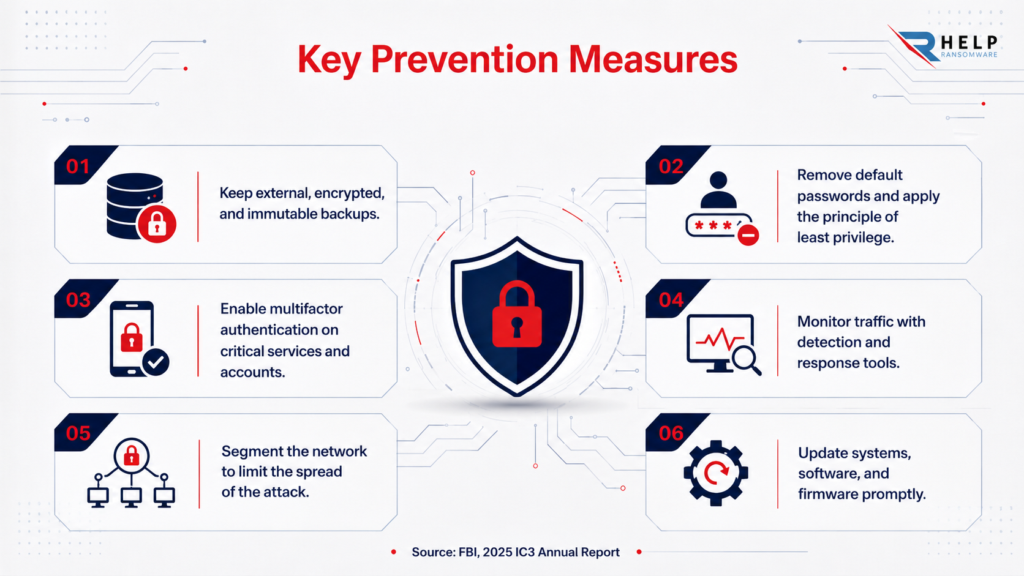
The 2025 FBI/IC3 report recommends securing initial access points, logging and monitoring network traffic, implementing endpoint detection and response tools, segmenting networks, and prioritizing patches for exploited vulnerabilities in internet-facing systems.
This pattern shows that prevention cannot depend on a single tool. Companies need access controls, multifactor authentication, patch management, behavioral monitoring, and a tested cyberattack response plan before a crisis occurs.
How to Protect Your Business from Ransomware as a Service
Protection against ransomware as a service requires reducing the opportunities available to affiliates. This means applying security patches, removing default credentials, securing VPN and RDP access, limiting administrative privileges, enabling MFA, segmenting networks, and monitoring lateral movement across the corporate environment.
The FBI recommends maintaining offline or off-site backups, establishing restoration procedures, encrypting backup data, removing default passwords, applying the principle of least privilege, and enabling MFA, particularly for webmail, VPNs, and accounts with access to critical systems.
Recovery and Decryption After a RaaS Attack
It is also essential to test recovery processes regularly. A backup that cannot be restored is not a real solution because the company must confirm that it can resume operations without depending on the attacker.
If encryption has already occurred, technical analysis and ransomware decryption may form part of a recovery strategy. However, these measures must be accompanied by containment, forensic analysis, and an exfiltration assessment to determine whether data was stolen before encryption.
Conclusion
Ransomware as a service has transformed ransomware into a scalable criminal business. It is no longer simply malware, but an underground economy in which operators, affiliates, initial access brokers, and extortion services work together to compromise organizations.
For CISOs and IT leaders, the response must be strategic. Protecting a company against RaaS means reducing exposed access, strengthening credentials, detecting anomalous movement, securing backups, preparing the response, and testing recovery before a real incident occurs.
At HelpRansomware, we help organizations respond to ransomware incidents, recover critical information, and strengthen their cyber resilience against advanced threats.
If your company wants to assess its exposure to ransomware as a service or needs support during an incident, now is the time to act before the attack becomes a complete business disruption.
FAQ
Because it divides responsibilities as if they were separate business departments: some actors develop the ransomware, others obtain access, others carry out the intrusion, and others manage the extortion. This division makes it easier to scale attacks and share profits.
Yes. Small and medium-sized businesses can be attractive targets because they often have fewer security resources, poorly protected remote access, or inadequately tested backups. For an affiliate, a small company with valuable data can still be profitable.
A RaaS operation may be suspected when ransom notes are associated with known families, data leak sites are involved, negotiations follow a structured process, or the tactics match those commonly used by affiliates. Reliable attribution requires technical analysis and indicators of compromise.
Backups can help restore systems, but they do not eliminate the risk posed by stolen data. If exfiltration occurred, the company must also manage information exposure, communications, and regulatory compliance.
The company should review remote access, MFA, privileged accounts, critical patches, network segmentation, backup protection, and incident response capabilities. The objective is to make initial access more difficult and limit the impact of any compromise.
Immediate Ransomware Help
Don’t let ransomware hold your business hostage. Our experts are ready to recover your data and secure your systems.