For years, many companies associated digital extortion with a specific scenario: encrypted files, a ransom note, and a countdown to pay. That model still exists, but it no longer fully describes the threat.
Today, cyber extortion can occur even without encryption, visible malware, or an operational outage as the first sign.

Expert Ransomware Removal
Our certified professionals have over 25 years of experience in ransomware removal, data recovery, and computer security.
Cybercriminals have learned that data, reputation, and business continuity can be just as valuable as a decryption key.
That is why they steal information, threaten to publish it, sell access, contact third parties, launch DDoS attacks, or reuse credentials to keep the pressure on.
For IT leaders, CISOs, and executives, the challenge is clear: protecting a company from cyber extortion means preparing for a broader, faster, and harder-to-contain crime than traditional ransomware.
What Is Cyber Extortion
Cyber extortion is any digital threat designed to force a person or organization to pay, hand over information, conceal an incident, or make a decision under pressure.
It can include ransomware, data theft, leak threats, extortion-driven DDoS attacks, blackmail involving sensitive information, or the abuse of compromised access.
Ransomware remains one of its best-known forms. However, it is no longer the only one. In a joint paper, the NCSC and the National Crime Agency explain that some groups carry out data theft and extortion without deploying ransomware, choosing the technique they believe is most effective for securing payment.
This means a ransomware attack may be only one element in a broader strategy. The real threat is not always losing access to files, but losing control over data, communications, and the trust of customers or partners.
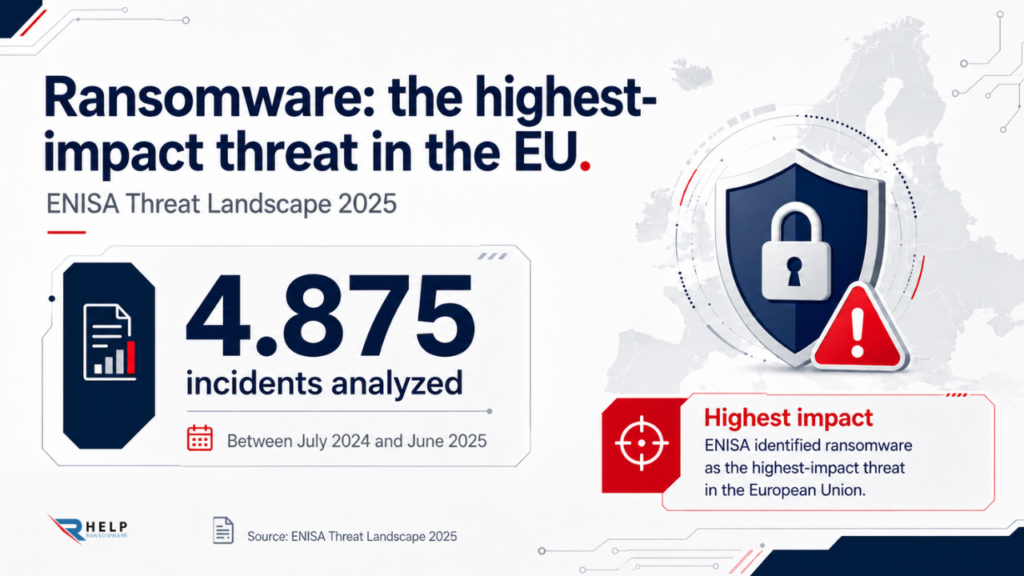
The scale of this shift can be seen in recent data from the European Union.
Why We’re No Longer Talking Only About Ransomware
Focusing only on ransomware can lead to an incomplete view of risk. In many incidents, encryption is no longer the central element.
Attackers can apply pressure by publishing stolen data, selling information on criminal forums, or exposing internal documents.
Europol warned in its Europol IOCTA 2025 that stolen data fuels a criminal market spanning online fraud, ransomware, exploitation, and extortion. In other words, stolen information has become a form of leverage.
Business data protection can no longer be viewed solely as a compliance obligation. It is a business continuity, reputation, and survival measure against cyber extortion.
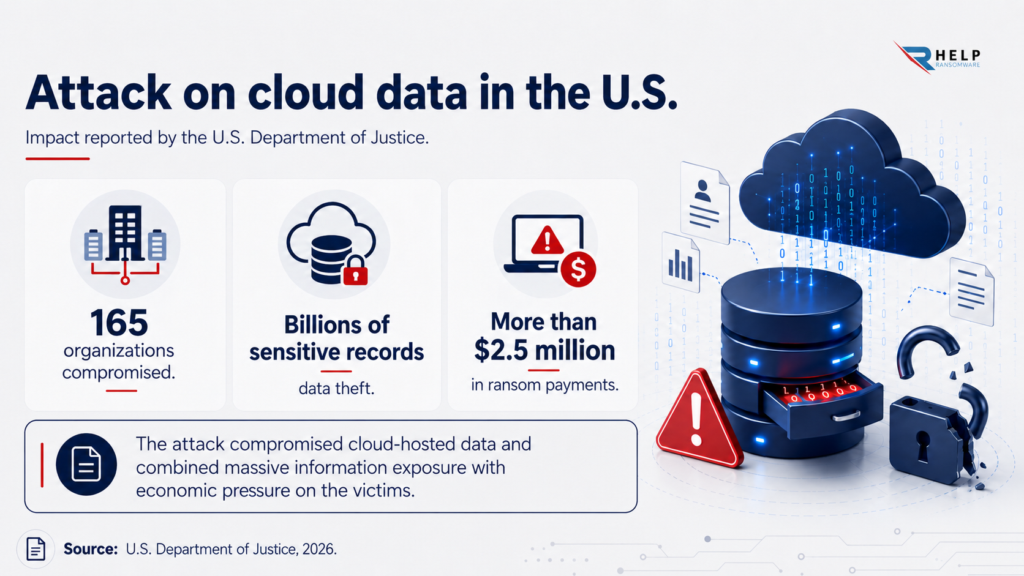
A recent case shows how cyber extortion can operate without encrypting systems. In 2026, the U.S. Department of Justice reported an extortion case involving customers of a cloud provider in which cloud-hosted data was compromised, billions of sensitive records were stolen, and victims were pressured with threats that the information would be published.
Main Forms of Cyber Extortion Affecting Businesses
Cyber extortion can take several forms. Some rely on malware; others depend on stolen access, social engineering, or reputational pressure.
The common goal is the same: turning a digital incident into an urgent decision about whether to pay.
Data Theft Extortion
In this model, attackers steal information and threaten to publish or sell it. This may include personal data, contracts, credentials, internal communications, intellectual property, or financial documents.
The impact depends not only on the volume of data, but also on its sensitivity and the harm its exposure can cause.
Double and Triple Extortion
Double extortion combines encryption with the threat of a data leak. Triple extortion adds pressure on third parties such as customers, employees, suppliers, or related organizations.
This approach increases the reputational cost of the incident and makes it more difficult for the company to manage the crisis quietly.
DDoS Threats and Service Disruption
The National Crime Agency states on its Cybercrime threat page that recent tactics used to pressure victims include making stolen data searchable online or threatening DDoS attacks to disrupt public-facing services.
This type of pressure can affect sales, support, website availability, and market confidence.

Immediate Ransomware Help
Don’t let ransomware hold your business hostage. Our experts are ready to recover your data and secure your systems.
How Attackers Operate
Cyber extortion groups rarely rely on a single technique. They may begin an attack with phishing, leaked credentials, vulnerability exploitation, poorly secured remote access, or intermediaries that sell entry into corporate networks.
ENISA reported in 2025 that phishing accounted for approximately 60% of the observed initial access points, followed by vulnerability exploitation at 21.3%. These figures reinforce an essential point: before the extortion phase, there is often a quiet period of access, reconnaissance, and exfiltration.
Once inside, attackers seek privileges, identify critical assets, copy data, erase traces, and prepare their pressure campaign. In some cases they encrypt systems; in others they do not. The goal is to create enough fear for the victim to consider paying before fully understanding the scope of the incident.
Business Impact of Cyber Extortion
The impact of cyber extortion is not limited to the ransom payment. It can cause operational disruption, lost revenue, litigation, regulatory penalties, customer churn, brand damage, and technical recovery costs.
It can also affect commercial negotiations if contracts, pricing, confidential agreements, or internal documents are exposed.
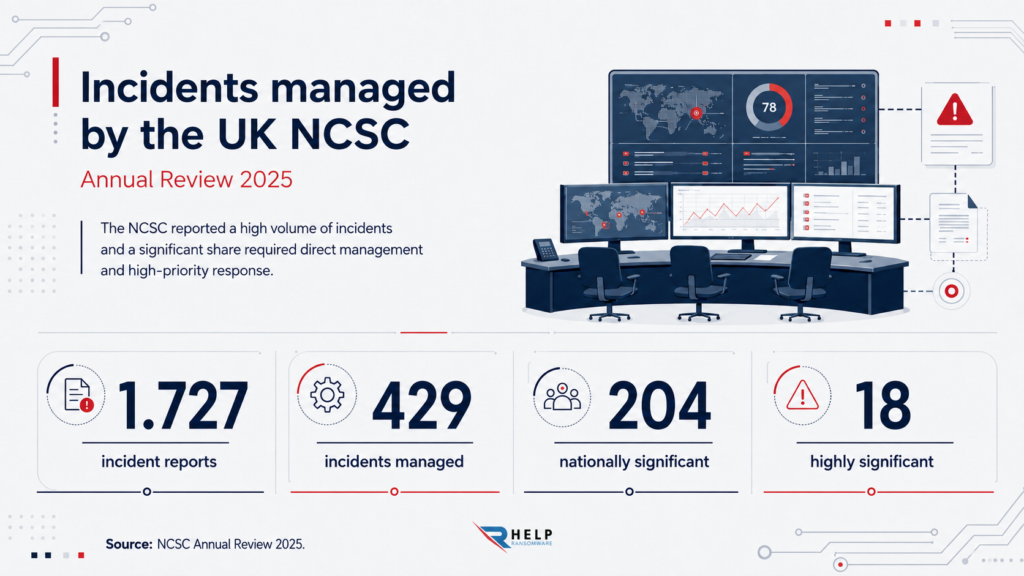
In its Annual Review 2025, the UK NCSC reported that its team received 1,727 incident notifications between September 2024 and August 2025, of which 429 required support. In addition, 204 were considered nationally significant and 18 highly significant.
These figures show that serious incidents are not isolated cases. For a business, the question is no longer whether an attack comes with ransomware, but whether there is a cyberattack response plan capable of coordinating technology, communications, legal, business continuity, and third-party relationships.
How to Protect Your Business from Cyber Extortion
Defending against cyber extortion requires a combination of prevention, detection, data protection, and crisis preparedness. Antivirus software and backups are not enough. A company needs to know what data it holds, where that data is stored, who can access it, and how to respond if it is stolen.
The StopRansomware Guide from CISA, MS-ISAC, NSA, and the FBI brings together best practices for preventing and responding to ransomware and data extortion. Key measures include offline backups, MFA, vulnerability management, segmentation, least privilege, monitoring, and a tested response plan.
Technical Controls and Response Readiness
Companies should close exposed access points, protect privileged accounts, review cloud configurations, log critical activity, and test restoration procedures.
They should also define what to do if an attacker threatens to publish data: who verifies the leak, who informs customers, who coordinates with authorities, and who preserves evidence.
Official alerts on Medusa ransomware show that modern threat actors combine initial access through brokers, phishing, or unpatched vulnerabilities with data exfiltration and ransomware deployment. That combination requires layered defenses, not a single tool.
Recovery After an Extortion Incident
If the incident includes encryption, technical analysis and ransomware recovery can form part of the recovery process. But in a cyber extortion case, the company must also determine what information was stolen, which third parties are affected, and what legal obligations are triggered.
A specialized ransomware consulting review can help identify gaps, strengthen controls, and prepare a strategy that addresses both technical recovery and crisis management.
Conclusion
Cyber extortion confirms that ransomware is no longer the only scenario businesses need to worry about. Attackers can encrypt, steal, leak, pressure third parties, or threaten to disrupt services.
Their goal is not simply to gain access to the network, but to control the narrative and force rapid decisions.
The response begins before an incident occurs: data inventories, MFA, segmentation, tested backups, monitoring, crisis communications, and a clear action plan. The better prepared the organization is, the less leverage attackers have.
At HelpRansomware, we help businesses respond to ransomware and cyber extortion incidents, recover critical information, and strengthen their resilience against increasingly aggressive threats.
FAQ
Yes. Cyber extortion does not always involve encryption. In some cases, attackers steal information, threaten to publish it, pressure customers or suppliers, or demand money to avoid disrupting digital services. Therefore, a company can face an extortion crisis even if its systems continue to function.
Double extortion is a specific form of cyber extortion that combines encryption with the threat of a data leak. Cyber extortion is broader and also includes DDoS attacks, data blackmail, pressure on third parties, and extortion without malware.
No. Paying does not guarantee that the data will be deleted or that it will not be resold. It may also fund further criminal activity and make the company a repeat target.
The most sensitive data: personal information, contracts, payroll records, credentials, internal emails, financial information, legal documents, intellectual property, and customer or supplier data.
It should combine technical prevention, tested backups, a data inventory, legal response, crisis communications, staff training, and a response plan that covers data leaks and external pressure.