Deepfake fraud is no longer a futuristic threat. Today, it can appear in a video call, a voice message, an online interview, a supposed order from the CEO, or a fake identity created to open accounts, request payments, or access sensitive information.
Deepfakes can imitate voices, faces, and human cues, making employees, suppliers, and customers less suspicious. That is why identity verification has become a critical security control.
The problem is not just the visual quality of the fake. The real risk emerges when deepfakes are combined with social engineering, psychological pressure, leaked data, and weak internal processes. At that point, fraud no longer depends on sophisticated malware and instead exploits human decisions made under pressure.

Fast & Guaranteed Recovery
HelpRansomware provides a 100% guaranteed ransomware removal and data recovery service, with 24/7 worldwide assistance.
What Is Deepfake Fraud?
Deepfake fraud uses artificial intelligence to create or manipulate audio, images, or video in order to impersonate a real person. It may involve a cloned voice ordering a transfer, a fake face used in a video call, or audiovisual content that appears to confirm a legitimate instruction.
The NCSC explains that generative artificial intelligence can produce text, images, and video, and warns that organizations should integrate security throughout the entire lifecycle of AI systems. For businesses, this means that cybersecurity in the age of AI must include controls against audiovisual impersonation, not just suspicious emails or malware.
The threat becomes especially dangerous when the attacker knows the organizational chart, schedules, communication style, and the names of financial decision-makers. With that information, a deepfake can look like a genuine instruction within an everyday business process.
Why Deepfakes Are Already Fooling Businesses
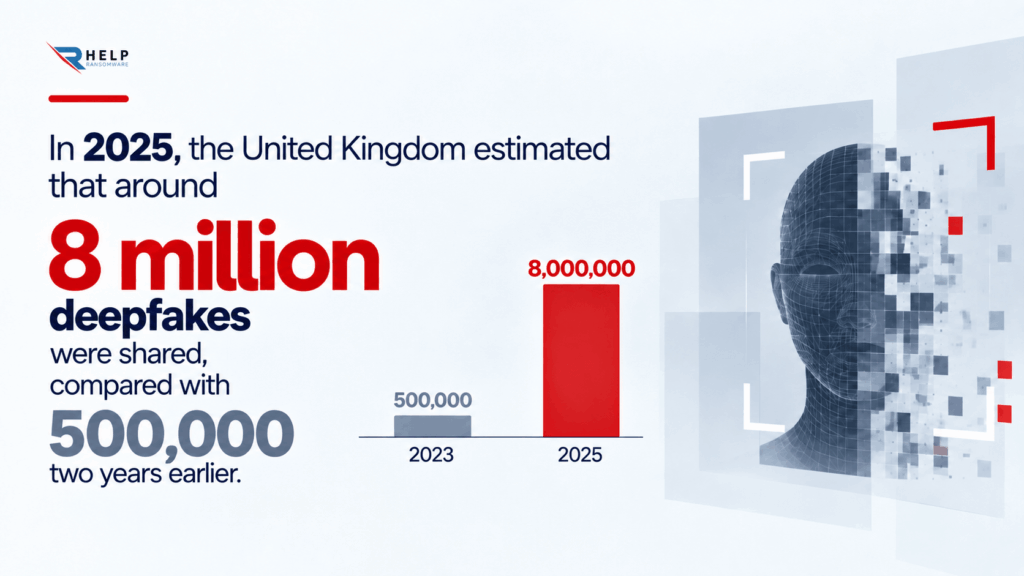
Deepfakes work because they do not attack technology alone: they attack trust. In a company, many decisions depend on recognizing a voice, validating a video call, or accepting an urgent request from someone in authority. When those signals can be faked, processes based solely on personal trust become vulnerable.
The UK’s National Assessment Centre Fraud Assessment 2025 states that criminal groups are adopting generative artificial intelligence, including deepfakes and voice cloning, to facilitate fraud against individuals and businesses.
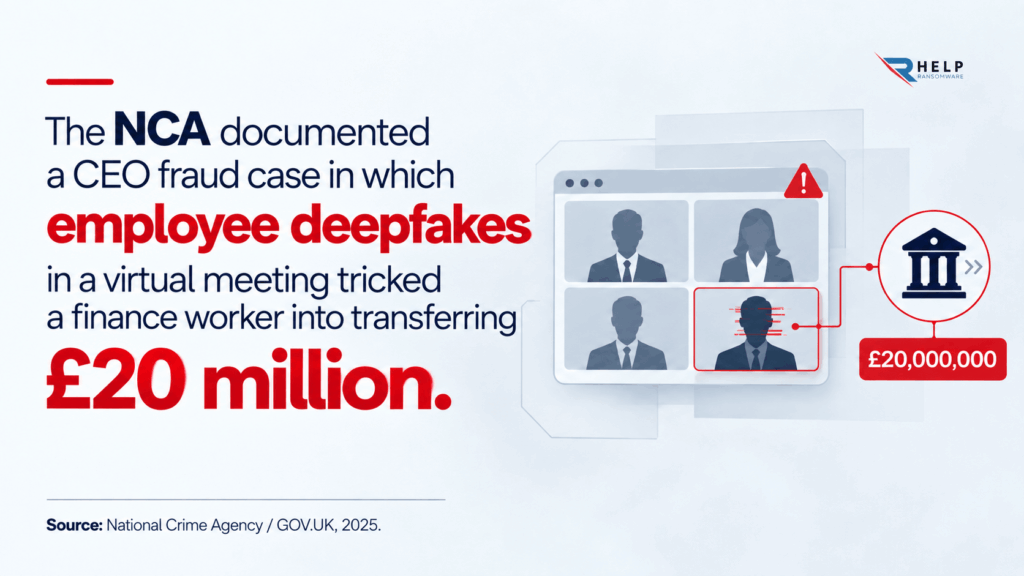
It also documents a CEO fraud case in which deepfake recreations of employees during a virtual meeting deceived a finance worker into transferring £20 million to an account controlled by criminals.
This type of attack shows that the risk is not limited to seeing a fake video on social media. It can enter through professional channels, executive meetings, and seemingly normal financial processes.
Warning Signs in a Call, Video Meeting, or Message
Detecting a deepfake is not always easy. Visual signs such as unusual lip movements, unnatural blinking, or changes in lighting can help, but they should not be the only criterion.
As the technology improves, many fakes will be convincing enough to pass a superficial review.
The best defense is to look at the context. An urgent payment request, an instruction that bypasses normal channels, an unexpected video call with no time to verify it, or a refusal to follow internal protocols are more important warning signs than the quality of the video. In many cybercrimes, the deception works because it combines a credible appearance with emotional pressure.
Indicators That Should Trigger Additional Verification
Certain signs may indicate that a request needs additional verification before it is carried out. Identifying them early helps stop impersonation attempts, fraud, or the use of deepfakes before they cause operational or financial damage.
- The person requests transfers, credentials, or sensitive data outside the usual procedure.
- The communication emphasizes urgency, extreme confidentiality, or an inability to consult third parties.
- The channel being used does not match the company’s protocol for critical authorizations.
- The voice, tone, lighting, or gestures seem slightly inconsistent.
- The request appears immediately after a data breach, a supplier change, or an internal crisis.
Risks for Finance, Human Resources, and Management
Deepfake fraud especially affects teams that manage payments, identity, hiring, and executive decisions. Finance may receive fake transfer instructions.
Human Resources may interview candidates using manipulated identities. Executives may be impersonated to authorize urgent transactions. Customer support may receive calls using cloned voices to change account details.
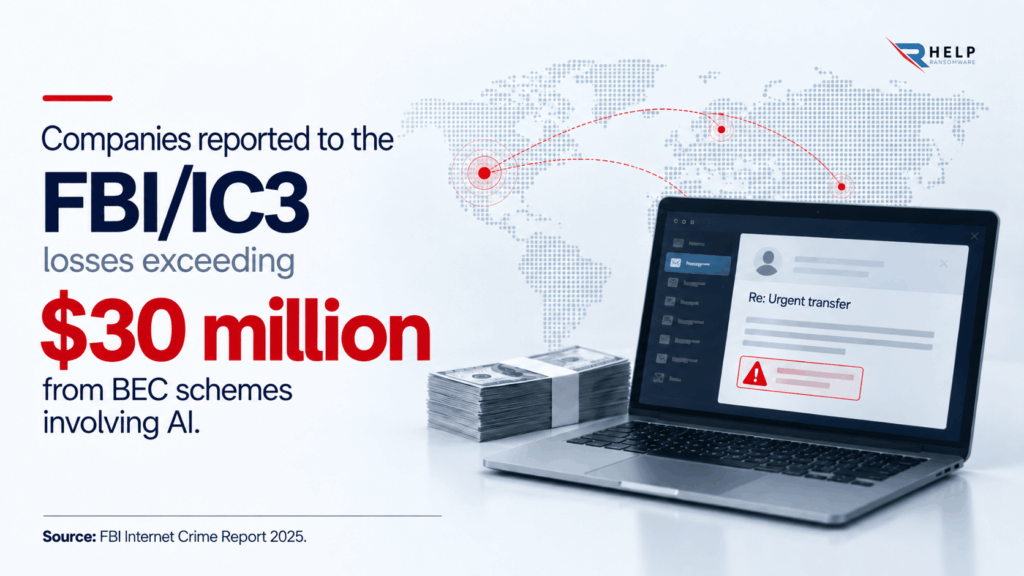
The FBI Internet Crime Report 2025 states that AI-enabled synthetic content is becoming increasingly difficult to detect and easier to create, enabling criminals to carry out fraud against individuals, businesses, and financial institutions.
The report also states that in 2025, businesses reported losses exceeding $30 million in BEC schemes involving AI.
The impact is not always purely financial. A successful attack can expose confidential information, compromise business data protection, damage the company’s reputation, and raise doubts about its ability to verify critical identities.
How to Detect Deepfake Fraud Before It Causes Damage
Detection should combine technology, processes, and internal culture. Audiovisual analysis tools can help, but no solution should replace human and operational verification.
A deepfake can be technically convincing and still fail if the company requires critical requests to be confirmed through independent channels.
An effective cybersecurity strategy for businesses should establish clear rules: which operations require dual approval, which channels are valid, who can authorize payments, how a video call is confirmed, and what to do if someone detects a suspicious sign.
Sensitive instructions should be verified through an alternative channel already on record, such as a corporate phone call or a second authorized approver. It is also advisable to strengthen payments and identity with approvals, validated beneficiaries, phishing-resistant MFA, and controls over onboarding, access, and bank-account changes.
How to Protect Your Business from Deepfake Fraud
Protection begins by accepting that a voice or face is no longer sufficient proof of identity. Companies should update their authorization policies so that no critical operation depends solely on a call, audio recording, video, or instruction sent through a messaging platform.
The FTC reported that impersonation scams were the most commonly reported fraud category in 2025 and that reported losses from these scams reached $3.5 billion. Although not all of those cases involved deepfakes, the figure shows the economic scale of fraud based on pretending to be someone trusted.
To reduce the risk, the company should train employees in finance, management, procurement, support, and human resources. Training should include realistic examples: cloned-voice calls, fake meetings, urgent payment requests, bank-account changes, and AI-generated messages.
It is also advisable to include these scenarios in the cyberattack response plan. If a fraudulent transfer occurs or sensitive data is shared, the team should know who to escalate to, how to preserve evidence, when to contact the bank, and how to communicate the incident internally.

Expert Ransomware Removal
Our certified professionals have over 25 years of experience in ransomware removal, data recovery, and computer security.
What to Do If You Suspect a Deepfake
If an employee suspects that a call, audio recording, or video call has been manipulated, they should stop the transaction and report the incident. Speed is critical: in financial fraud, the first few hours can be decisive for blocking accounts, notifying the bank, and preserving records.
The company should preserve screenshots, emails, recordings permitted under applicable law, bank-account details, phone numbers, IP addresses, affected user accounts, and any associated evidence.
It should also review whether the attacker used internal information obtained through previous data leaks, phishing, or unauthorized access. The procedure should be aligned with what the organization has already defined regarding what to do after a cyberattack.
When funds have been transferred, the bank should be contacted immediately. When personal data or sensitive information has been exposed, legal, compliance, and communications teams should assess regulatory obligations, reputational impact, and messaging for affected parties.
Conclusion
Deepfake fraud is forcing companies to rethink how they verify identity, authority, and trust. In an environment where a voice, a face, or a meeting can be faked, traditional controls are no longer enough.
The answer is not to distrust everything, but to design processes that do not depend on a single signal.
Dual approvals, out-of-band verification, training, payment controls, data protection, and response plans are key to reducing the impact.
At HelpRansomware, we help companies strengthen their cybersecurity, respond to incidents, and prepare resilience strategies for increasingly complex digital threats. When it comes to deepfake fraud, acting before an incident can make the difference between a contained suspicion and a full-scale business crisis.
FAQ
No. Large companies may be attractive targets because of their payment volumes, but any organization that handles transfers, suppliers, remote interviews, or customer service can become a victim.
Not always. A video call can help, but it should not be the only proof used to authorize payments, bank-account changes, or access to sensitive information. Verification should be carried out through independent channels.
Finance, human resources, procurement, management, and customer support are often the most exposed because they handle payments, identities, suppliers, and sensitive decisions. They are also frequent targets because they centralize access, authorizations, and data that are highly valuable to attackers.
There may sometimes be visual clues, but relying on them alone is not recommended. Detection should be supported by context, protocols, out-of-band verification, and authorization controls.
They should stop the transaction, avoid sharing data, report the case through the designated internal channel, and verify the request with an authorized person using a method different from the original channel.