Artificial intelligence is moving beyond tools that simply answer questions. The new phase is being driven by artificial intelligence agents, systems capable of planning, making decisions, using tools, and taking actions with varying levels of autonomy.
For businesses, this shift creates major opportunities: automating repetitive tasks, analyzing alerts, supporting security teams, and reducing processing times across internal workflows.
This also raises a critical question: what happens when an AI system has access to real-world data, credentials, applications, and workflows?

Fast & Guaranteed Recovery
HelpRansomware provides a 100% guaranteed ransomware removal and data recovery service, with 24/7 worldwide assistance.
The risk is not limited to an agent making a mistake. It can also be manipulated, receive malicious instructions, misuse tools, or take actions beyond its intended boundaries. That is why discussing AI agents is no longer just about productivity: it is also about governance, security, and operational control.
What Are Artificial Intelligence Agents?
Artificial intelligence agents are systems that go beyond generating text, images, or answers. Their key difference is that they can receive a goal, break it into steps, retrieve information, remember context, use external tools, and take actions to complete a task.
The UK NCSC explains that agentic AI can access data sources, maintain context, make decisions, use tools, and act toward a goal.
This capability makes it useful, but also more dangerous than a traditional generative AI tool when connected to real business systems.
In practice, an agent can review an inbox, create tickets, summarize incidents, change configurations, query a database, interact with APIs, or trigger workflows across enterprise platforms. The difference is that it no longer only recommends: it can act.
Why AI Agents Are Changing Enterprise Cybersecurity
AI agents are changing cybersecurity in the age of AI because they expand the attack surface. An isolated AI tool may produce an incorrect answer; a connected agent may execute an incorrect action. That distinction is fundamental for CISOs, IT teams, and compliance leaders.
An agent with broad permissions can access internal documents, interpret emails, query systems, send information, make changes, or interact with critical applications. If permissions are poorly designed, the agent can become a bridge between a malicious instruction and a real action inside the organization.
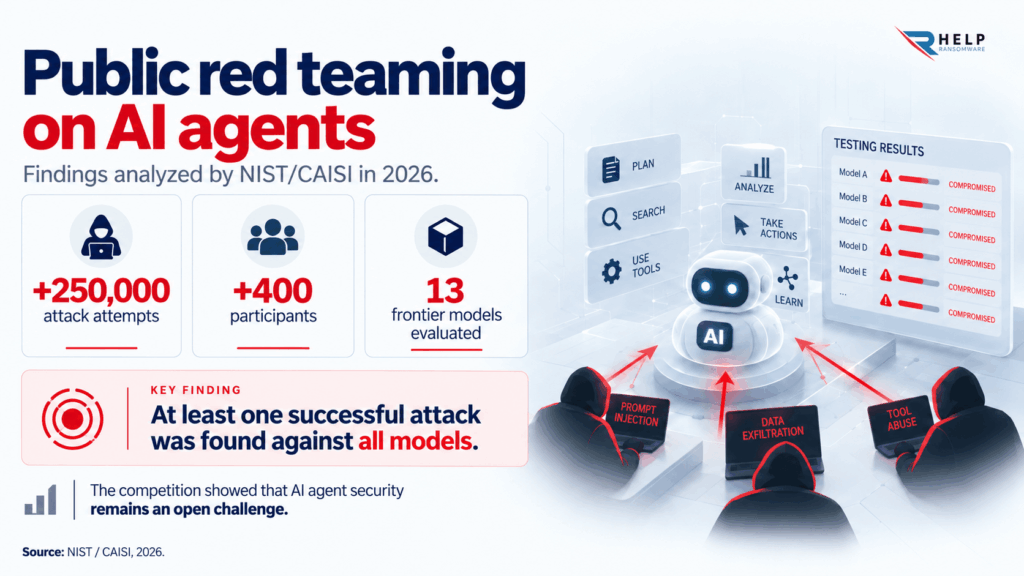
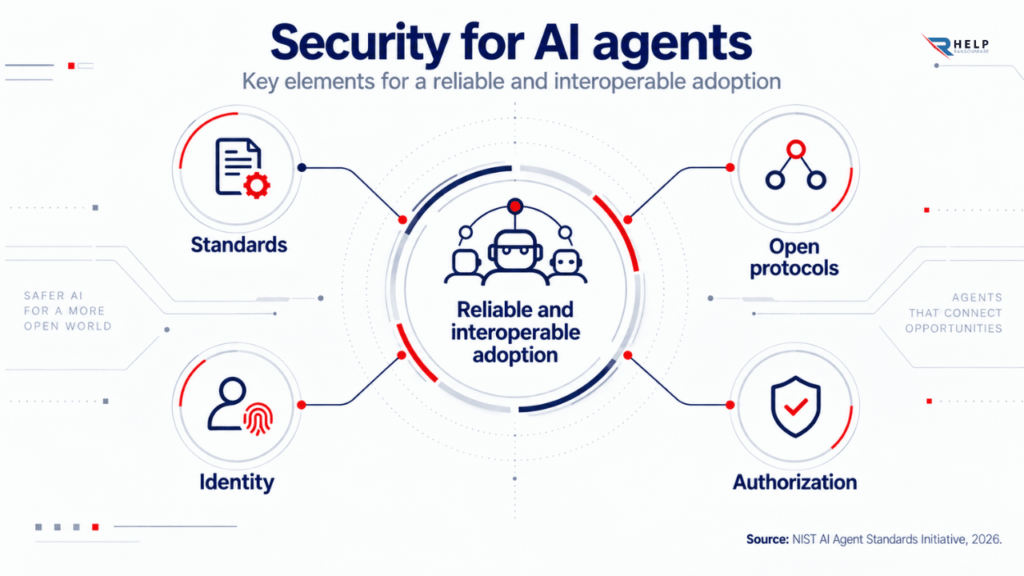
In 2026, NIST launched the AI Agent Standards Initiative to advance technical standards, interoperability, security, and identity for AI agent systems.
NIST itself notes that these agents can operate autonomously for hours, manage email and calendars, write or debug code, and interact with digital systems.
From Assistant to Operator
The shift from assistant to operator requires organizations to rethink security architecture. Blocking access to certain data through an interface is no longer enough.
Companies must define which tools the agent can use, which actions require human approval, which credentials it uses, how its decisions are logged, and how its activity can be stopped if something goes wrong.
Key Risks of Artificial Intelligence Agents
The joint guide Careful Adoption of Agentic AI Services, published in 2026 by ASD ACSC, CISA, NSA, the Canadian Centre for Cyber Security, NCSC-NZ, and NCSC-UK, warns that agentic AI can cause productivity losses, service disruptions, privacy breaches, or cybersecurity incidents when adopted without appropriate controls.
One of the most important risks is prompt injection. In an agent, a malicious instruction can do more than alter a response: it can also cause the system to use a tool, access sensitive information, or perform an unintended action.
Other risks include tool abuse, data leakage, memory poisoning, privilege escalation, failures in multi-agent chains, and decisions that are difficult to explain. The more access an agent has, the greater the potential impact of a manipulated instruction or a design flaw.
Indirect Prompt Injection and Tool Abuse
Indirect prompt injection occurs when an agent processes manipulated external content, such as an email, webpage, document, or ticket. If that content contains hidden or persuasive instructions, the agent may interpret them as part of the task and act outside its intended boundaries.
Tool abuse is another critical risk. An agent connected to file systems, CRM platforms, email, cloud environments, or administrative tools can execute actions with real consequences. Security must therefore focus on permissions, boundaries, human approval, and traceability, not just model quality.
Risks to Data, Memory, and Context
AI agents work with context. They can remember instructions, retrieve documents, reuse information, and maintain memory across sessions. This improves efficiency, but also creates new exposure points for sensitive data.
If an agent stores incorrect, manipulated, or malicious information, that memory can influence future decisions. In enterprise environments, this risk is linked to issues such as data poisoning, credential leakage, data mixing between users, or exposing confidential information to external tools.
Enterprise data protection must be built into the design from the start. Before connecting an agent to internal repositories, the company needs to know which data it can read, which data it can modify, what information it can send outside the environment, and what logs will remain available for audit.
How to Mitigate AI Agent Risks
Mitigation starts with a simple principle: an agent should not have more autonomy or permissions than it needs.
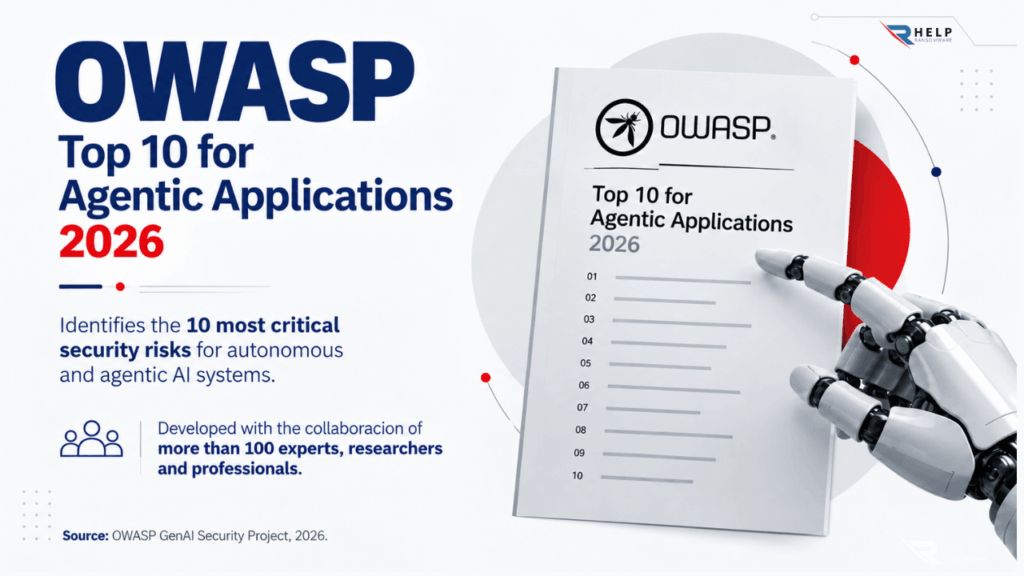
OWASP recommends controls such as action classification, human approval for high-impact operations, output validation, monitoring, observability, data protection, adversarial testing, and security specifically designed for multi-agent architectures.
In practice, this means applying least privilege, limiting the agent’s scope, avoiding permanent credentials, using temporary credentials, logging every action, maintaining separate test environments, and establishing clear rules for what the agent can do without human approval.
These controls should also be integrated into a cyberattack response plan. If an agent behaves unexpectedly, leaks information, or makes unauthorized changes, the organization must be able to investigate, contain the issue, revoke access, and communicate the incident without improvising.
Human Oversight and an Emergency Stop
AI agents should operate with oversight proportionate to risk. For low-impact actions, retrospective monitoring may be sufficient; critical actions should require prior human approval. The organization must also be able to stop the agent, revoke its credentials, and isolate its environment if anomalous activity is detected.
What Companies Should Review Before Using AI Agents
Before deploying AI agents, the company should answer practical questions. What is the agent’s objective? What data does it need? Which tools can it use? What actions can it execute? What happens if it receives malicious instructions? Who approves its permissions? Who reviews the logs? Who can stop it?
It is also advisable to start with limited pilots focused on repetitive, well-defined, low-risk tasks. Connecting an agent directly to critical systems without testing, a sandbox, or clearly assigned owners can turn useful automation into an operational vulnerability.
Agents should also be included in the digital asset inventory. Just as a company tracks applications, accounts, APIs, and vendors, it should record agents, models, connectors, credentials, permissions, owners, and data flows. Without an inventory, there is no real governance.
Expert Ransomware Removal
Our certified professionals have over 25 years of experience in ransomware removal, data recovery, and computer security.
Artificial Intelligence Agents and Incident Response
AI agents can also support defensive operations. They can classify alerts, generate analyst summaries, correlate signals, review logs, suggest detection rules, or accelerate repetitive SOC tasks. But their defensive use must follow the same principles: boundaries, oversight, traceability, and testing.
In sensitive areas such as ransomware, fraud, or data exfiltration, an agent can support initial analysis, but it should not replace expert judgment. Responding to a ransomware attack requires technical validation, forensic analysis, legal coordination, and crisis communications.
The promise of artificial intelligence agents is not to automate everything, but to automate what can be controlled. Security depends on designing agents that support human teams without unnecessarily increasing the organization’s exposure.
Conclusion
Artificial intelligence agents represent one of the most significant transformations in enterprise productivity and cybersecurity.
They can accelerate processes, reduce operational workload, and support digital defense. But their autonomy also introduces new risks: unintended actions, data leakage, tool abuse, prompt injection manipulation, and failures that can be difficult to detect.
The goal is not to reject the technology, but to adopt it with appropriate controls. Companies should begin with low-risk use cases, limit permissions, apply human oversight, log actions, test adversarial scenarios, and maintain response capabilities.
At HelpRansomware, we help organizations strengthen security, respond to critical incidents, and prepare for threats that combine AI, ransomware, data leakage, and digital extortion.
FAQ
No. A chatbot typically answers questions or generates content. An AI agent can plan steps, use tools, query systems, and execute actions. This makes it more useful, but also more security-sensitive.
The biggest risk arises when an agent has excessive permissions or can act without oversight. If it receives a malicious instruction or misinterprets a goal, it may access sensitive data, misuse tools, or make unauthorized changes.
Yes. In fact, the risk can be greater than with traditional generative AI because an agent can turn a manipulated instruction into a concrete action within enterprise systems.
This should not be a decision made by innovation or IT alone. Security, legal, compliance, data protection, operations, and leadership should also be involved, especially if the agent accesses critical information or performs consequential actions.
The best approach is to start with small pilots, low-risk tasks, minimal permissions, non-sensitive data, human oversight, and full activity logging. The company can then expand the scope only if the controls prove effective.