
The email arrives unexpectedly. In the message, someone claims to have accessed your computer and recorded a compromising video using your webcam. To prove the access is real, the attacker includes an old password you used years ago. Then comes the threat: if you don’t pay in cryptocurrency, the supposed video will be sent to all your contacts.
In many cases, that video never existed.
This type of digital blackmail is part of a growing phenomenon known as sextortion, a form of online extortion that has increased significantly in recent years. Cybercriminals no longer need to obtain real material to intimidate their victims. Today, they can use leaked data, social engineering, or even artificial intelligence to create convincing threats.
Understanding how this type of attack works is essential to avoid becoming a victim of one of the fastest-growing forms of online extortion.

What sextortion is and why it is increasing
Sextortion is a form of digital extortion in which a criminal threatens to publish intimate content — real or manipulated — in order to demand money or favors from the victim.
Law enforcement agencies warn that this type of cybercrime continues to grow as attackers exploit personal data available online. The sextortion scams identified by the FBI highlight how criminals use intimidation and psychological pressure to force victims into paying quickly.
In many cases, attackers rely on passwords obtained from past data breaches to convince victims that their devices have been compromised.
Authorities also stress that these crimes can affect anyone who uses the internet, regardless of their technical knowledge.

Expert Ransomware Removal
Our certified professionals have over 25 years of experience in ransomware removal, data recovery, and computer security.
How cybercriminals use artificial intelligence to carry out blackmail
Technological advances are also transforming this type of cybercrime. Criminals are beginning to use tools related to AI in cybersecurity to create more convincing threats and automate extortion campaigns.
Deepfakes and manipulated videos
Artificial intelligence can generate realistic videos using publicly available photos from social media accounts. This technology, known as deepfake, can simulate intimate situations that never actually occurred.
Even when the material is fake, the psychological impact on victims can be significant, especially when attackers threaten to send the content to colleagues, friends, or family members.
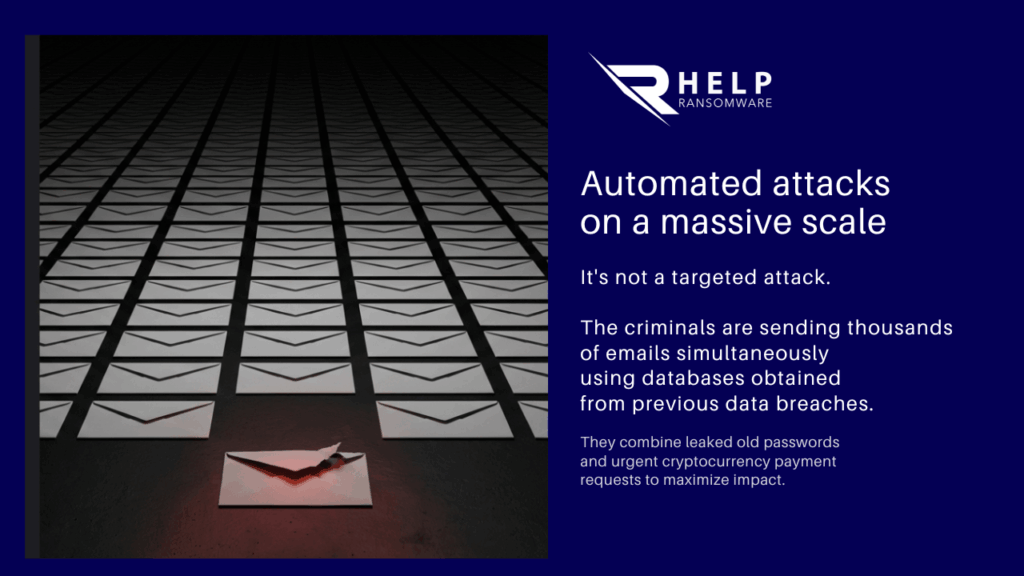
Automated extortion campaigns
In many cases, attackers do not target victims individually. Instead, they send thousands of automated emails using data obtained from previous breaches.
These messages often include:
- old passwords
- urgent threats
- cryptocurrency payment requests
The goal is to create enough fear for some victims to pay immediately.
How a sextortion attack typically begins
Most sextortion attacks follow a predictable pattern.
First, the attacker obtains personal information about the victim. This may come from data leaks, social media, or publicly available information online.
Next, the criminal sends a message claiming they have access to the victim’s device or have recorded compromising material.
This type of blackmail shares similarities with other digital extortion schemes such as sextortion and ransomware, where the main goal is to create psychological pressure that leads to a quick payment.
In most cases, attackers demand cryptocurrency to make transactions harder to trace.
Law enforcement agencies, including U.S. Immigration and Customs Enforcement investigations into sextortion, warn that many of these crimes are part of organized cybercriminal operations.
The reputational impact of this type of blackmail
The goal of sextortion attacks is not always to publish content but to create enough fear for the victim to act quickly.
When people believe their reputation could be damaged, stress and urgency may push them to make impulsive decisions.
This type of threat can lead to serious cyber risk and reputational impact, especially if attackers claim they will share the content with colleagues, clients, or personal contacts.
The importance of protecting personal data
Much of the information used by attackers comes from public profiles, mobile applications, or previously leaked databases.
For this reason, improving mobile data security and limiting personal information exposure online is essential.
Protecting personal information has become a key priority within modern cybersecurity trends in 2025, where experts warn about the growth of psychological manipulation and digital extortion attacks.

Immediate Ransomware Help
Don’t let ransomware hold your business hostage. Our experts are ready to recover your data and secure your systems.
At HelpRansomware we work to strengthen your digital security, helping individuals and organizations understand how cybercriminals operate and how to identify threats before they cause real damage.
Understanding these tactics is the first step toward reducing the risk of becoming a victim.
Conclusion
Sextortion represents an evolution of digital blackmail driven by massive access to personal data, social engineering, and the growing use of artificial intelligence.
As these technologies become more accessible, cybercriminals continue to develop new ways to manipulate fear and exploit the reputations of their victims.
Staying informed, protecting personal accounts, and reducing online data exposure are key steps to minimizing the impact of these attacks.
Frequently Asked Questions about Sextortion
What is sextortion?
Sextortion is a form of online blackmail where criminals threaten to release intimate content — real or fake — to demand money.
Do attackers actually have videos of the victim?
In many cases they do not. Most campaigns rely on fear and intimidation rather than real material.
What should I do if I receive a sextortion email?
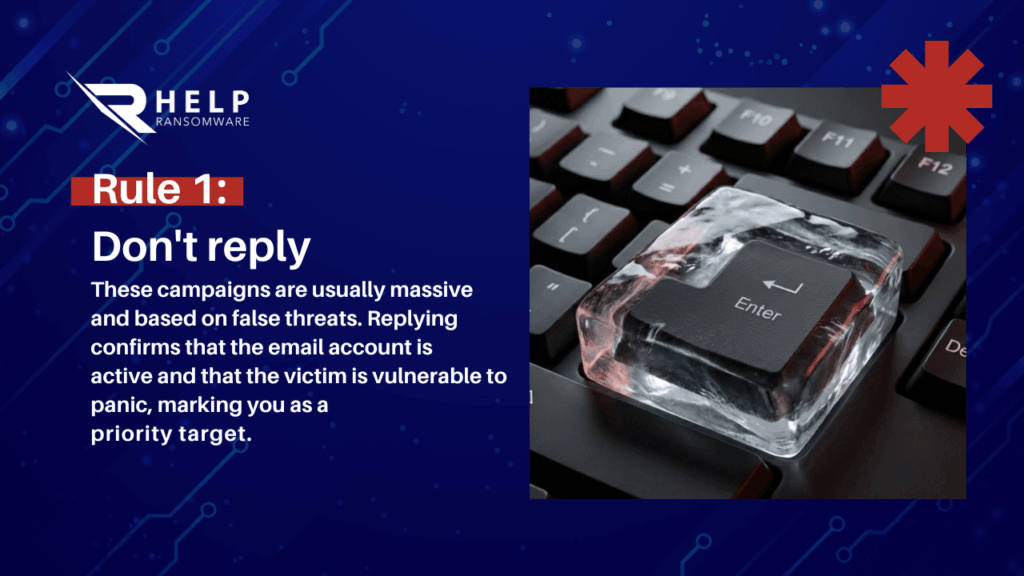
Do not respond, do not pay the attacker, save the message as evidence, and update your passwords.
How do attackers get my information?
They often obtain data from leaks, public social media profiles, or compromised databases.
Can sextortion attacks be prevented?
Reducing personal data exposure online, using strong passwords, and enabling multi-factor authentication can significantly reduce the risk.