Data security on mobile devices has become a strategic priority for organizations of all sizes. Smartphones and tablets are no longer just communication tools: they hold corporate credentials, access to internal systems, financial applications, and confidential documents. This concentration of information makes each mobile device a critical point within the enterprise digital ecosystem.

Fast & Guaranteed Recovery
HelpRansomware provides a 100% guaranteed ransomware removal and data recovery service, with 24/7 worldwide assistance.
The risk lies not only in the physical loss of the device, but also in the possibility that an attacker could exploit vulnerabilities invisible to the user. A single click on a malicious link, the installation of a compromised application, or a connection to an unsecured network can be enough to trigger an intrusion. In many cases, the attack goes unnoticed until the operational and reputational impact is already significant.
Why mobile phones have become the new priority target
Mobile devices operate in hybrid and highly dynamic environments. They connect to corporate, home, and public networks, synchronize data in the cloud, and manage multiple applications with varying levels of permissions. This combination expands the attack surface and makes centralized control more difficult.
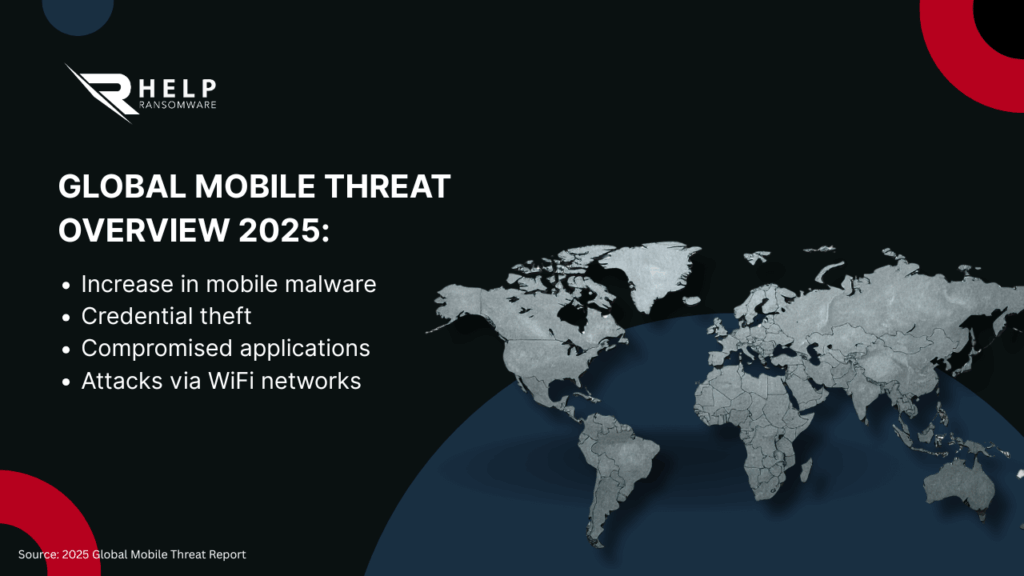
The 2025 Global Mobile Threat Report confirms that the growth of remote work and reliance on enterprise applications have significantly increased mobile-related incidents.
The threat is not limited to traditional malware. Today’s attacks include credential theft, session hijacking, compromised applications, and advanced social engineering techniques, specifically designed to exploit the speed of interaction in mobile environments.
The most commonly used attack vectors in mobile environments
Most mobile attacks don’t begin with sophisticated code, but with seemingly innocuous decisions. Mobile-optimized phishing campaigns exploit the speed at which users react to notifications. Apps downloaded from unofficial stores or with excessive permissions can become silent entry points.
Mobile phones Threat Landscape report, published in 2025 by CERT-FR, warns that attackers take advantage of user trust in the mobile environment, combining social engineering with technical exploitation of vulnerabilities.
When a device is compromised, the attacker can intercept credentials, capture sensitive information, or establish persistence, using the mobile device as a bridge to more critical corporate systems.
The most common mistake in mobile security
One of the most common mistakes is treating mobile devices as secondary within the security architecture. This perception creates gaps in policies regarding updates, encryption, and advanced authentication. However, mobile devices often contain the same strategic access points as corporate laptops, but with less oversight.
Immediate Ransomware Help
Don’t let ransomware hold your business hostage. Our experts are ready to recover your data and secure your systems.
Ignoring this reality increases the risk of incidents that can escalate to entire infrastructures.
When a compromised mobile device escalates into a major incident
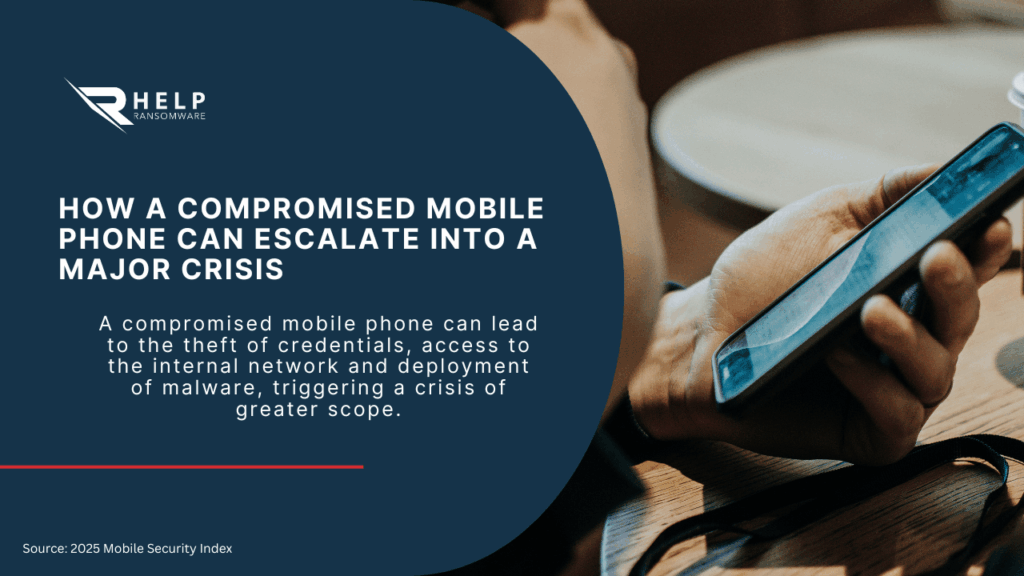
A compromised smartphone is rarely the attacker’s ultimate target. In many cases, it acts as the initial entry point into the corporate network. The 2025 Mobile Security Index notes that using corporate credentials on personal devices amplifies the risk of attack spread.
Once the credentials are obtained, the attacker can proceed through lateral movement, privilege escalation, and the exfiltration of critical data. In such a scenario, an effective ransomware recovery strategy must consider mobile devices as an integral part of the digital perimeter, ensuring they are included in monitoring controls, access management policies, and incident response planning.
Mobile security and organizational culture
Technology is essential, but user awareness remains crucial. Many incidents begin with an everyday action: opening a message, accepting a permission, or connecting to a free network. Ongoing training drastically reduces the likelihood of these tactics succeeding.
Organizations that invest in clear usage protocols and ongoing training show less exposure to critical incidents.
Real impact of a breach originating from a mobile phone
The consequences of a mobile breach can extend far beyond the immediate loss of information. An intrusion may result in the exposure of customer data, operational disruptions, regulatory penalties, and long-term reputational damage. Organizations seeking to prevent ransomware attack scenarios have increasingly identified compromised mobile devices as the initial point of access in broader security incidents.
Conclusion
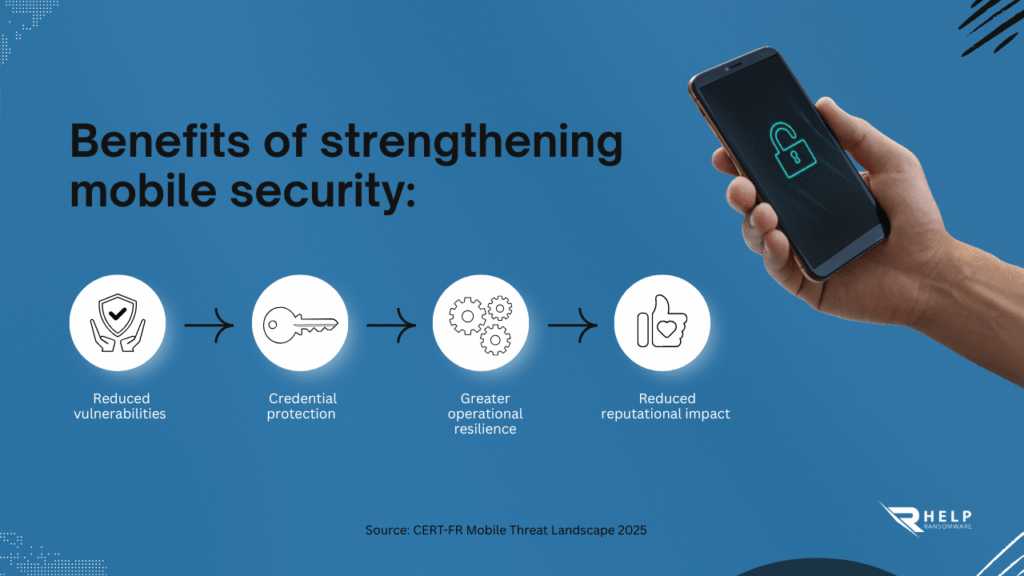
Mobile data security is not an optional add-on to corporate cybersecurity, but a structural component of the enterprise protection model. Mobile devices concentrate strategic access points and operate in dynamic environments, making them prime targets for cybercriminals.
Preventing attacks in seconds requires a combination of robust technical controls, clear policies, and ongoing training. Organizations that integrate mobile security into their overall strategy, supported by specialized services focused on prevention, monitoring, and incident response, significantly reduce the risk of critical incidents and strengthen their long-term digital resilience.
Frequently Asked Questions (FAQ)
Mobile data security involves protecting information stored, transmitted, or accessed from smartphones and tablets through technical controls, organizational policies, and user training. It’s not just about installing antivirus software, but about implementing a comprehensive strategy that includes encryption, advanced authentication, and centralized device management.
Because they concentrate corporate credentials, access to business applications, and sensitive data, in addition to being constantly connected to various networks. This combination makes them an attractive entry point and, in many cases, less protected than other corporate systems.
Yes. A compromised mobile device can serve as an initial point of entry into the corporate network, facilitate the theft of credentials, and allow lateral movement to critical systems, triggering more widespread incidents.
Not completely. While they significantly reduce the risk compared to unofficial sources, they can also host apps with vulnerabilities or excessive permissions that, if exploited, can compromise device security.
No. Antivirus software is just one layer of protection. Effective security requires multi-factor authentication, data encryption, regular operating system updates, and proper access control policies.
Yes. Public Wi-Fi networks can facilitate data interception attacks if encrypted connections or VPNs are not used. The risk increases when accessing corporate information without additional protection.
In many cases, yes, since it mixes personal and professional use on the same device. This expands the attack surface and makes it more difficult to control updates, installed applications, and granted permissions.
It can lead to the loss of confidential data, regulatory penalties, operational disruptions, and significant reputational damage. In more serious scenarios, it can result in ransomware attacks that affect the entire infrastructure.
Yes. Many mobile attacks begin with social engineering. Awareness and ongoing training help employees identify red flags and avoid impulsive decisions that could compromise security.
Not entirely. However, a structured strategy that combines technology, clear policies, and training can drastically reduce the likelihood and impact of an incident.

Fast & Guaranteed Recovery
HelpRansomware provides a 100% guaranteed ransomware removal and data recovery service, with 24/7 worldwide assistance.