Artificial intelligence is already part of the day-to-day work of many organizations, even when leadership has not yet approved a formal strategy.
While the company evaluates tools, policies and vendors, many employees are already using generative AI applications to summarize documents, draft emails, analyze data, translate information or automate tasks.
This growth explains why shadow AI has become an urgent issue for CISOs, IT leaders, legal teams and executive committees.
The risk is not AI itself, but using it without control or traceability, and without knowing which corporate data ends up outside the authorized environment.

Expert Ransomware Removal
Our certified professionals have over 25 years of experience in ransomware removal, data recovery, and computer security.
What Is Shadow AI?
Shadow AI is the use of artificial intelligence tools, applications or services without formal approval or oversight from IT, security or compliance teams.
The concept stems from shadow IT, but applies to a new reality: employees using AI assistants, chatbots, extensions, APIs or external platforms to complete work without going through internal approval channels.
This unauthorized use can become a risk to cybersecurity in the AI era when internal data is processed outside controlled environments.
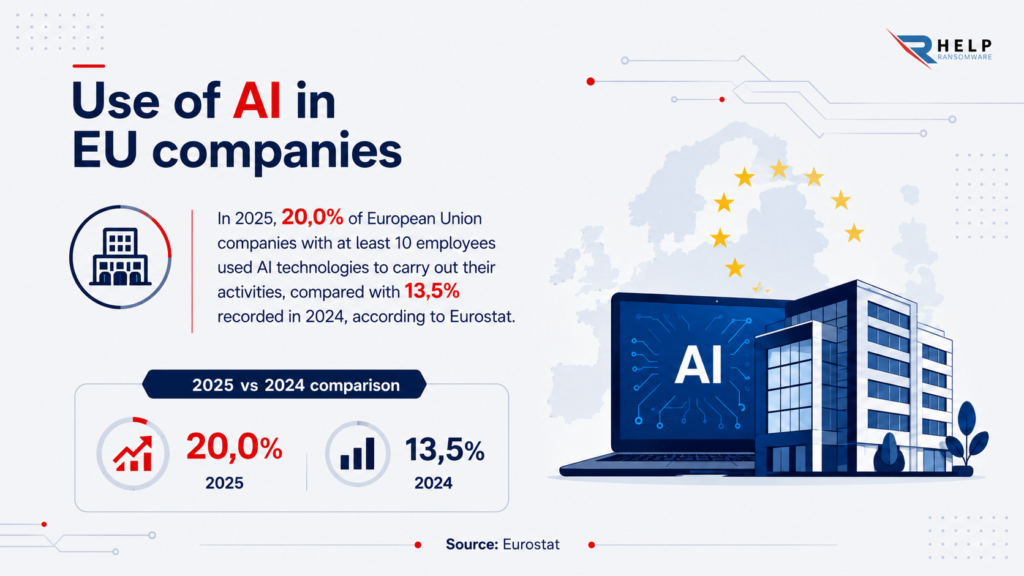
This rapid adoption increases the likelihood that some tools will be used outside authorized channels.
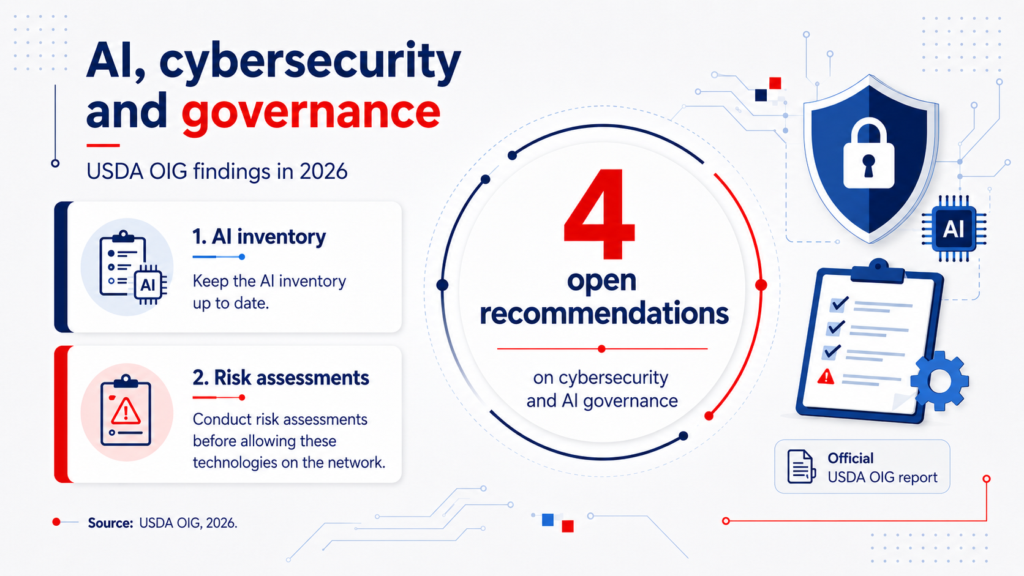
In 2026, the U.S. Department of Agriculture Office of Inspector General warned that insufficient cybersecurity and governance controls for AI systems can expose an organization to data breaches or reputational harm.
It also recommended processes for keeping the AI inventory up to date and conducting risk assessments before allowing AI technologies onto the network.
For a business, this means the risk does not arise only when a corporate AI platform is deployed. It also arises when an employee copies contracts, databases, financial reports, support tickets or customer information into an external tool the organization does not control.
Why Shadow AI Is Growing So Quickly
Shadow AI is growing because it addresses a genuine need: getting work done faster. Many teams use AI to reduce repetitive tasks, improve writing, analyze large volumes of information or generate ideas. The problem begins when adoption happens before a clear policy is in place.
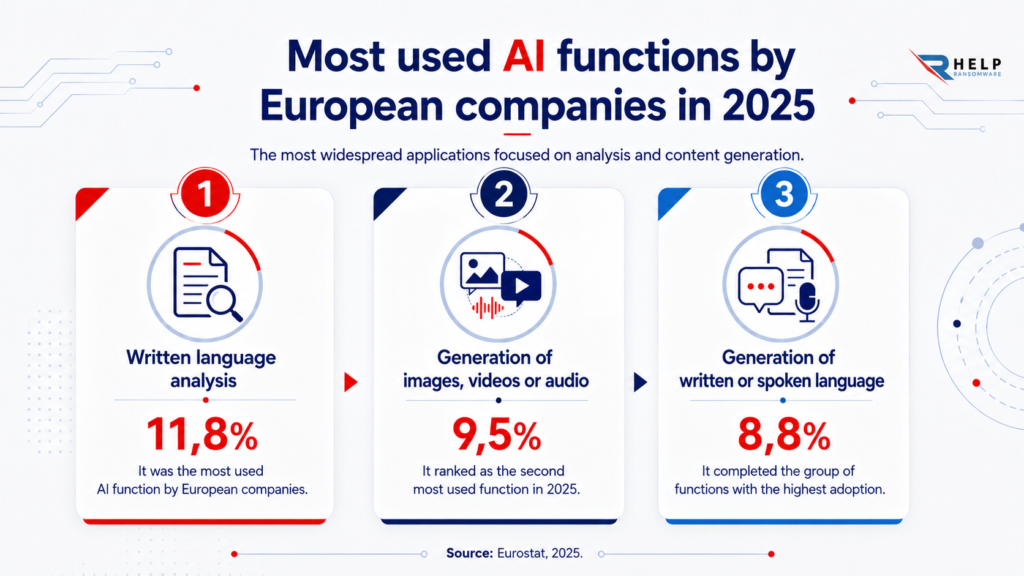
Eurostat reported that written-language analysis was the most widely used AI technology among European businesses in 2025, with 11.8% of enterprises using it. AI for generating images, videos or audio was used by 9.5%, while AI for generating written or spoken language was used by 8.8%.
In many cases, employees are not acting maliciously. They simply find a tool that helps them deliver work faster.
But when a company does not provide secure alternatives, training and clear, understandable rules, informal AI use can become a silent route to data exposure.
Shadow AI Risks to Company Data
The clearest risk posed by shadow AI is the loss of control over data. When an employee enters corporate information into an unauthorized tool, the company may not know where it is processed, how long it is retained, whether it is used to improve models or what security controls the provider applies.
In 2025, CISA published best-practice guidance on AI data security, emphasizing the importance of protecting the data used by artificial intelligence systems to preserve its integrity, confidentiality and trustworthiness.
Shadow AI can also undermine business data protection. Contracts, credentials, personal data, intellectual property, business strategies or customer information may be exposed without the security team detecting it in time.
In regulated industries, this can become a compliance, confidentiality and legal liability issue.
Impact on Cybersecurity and Ransomware
Shadow AI does not only create privacy risks. It can also increase exposure to threats such as phishing, credential theft and ransomware.
When employees share technical information, network diagrams, internal errors, vendor lists or system documentation through external tools, that information could make targeted attacks easier.
In 2025, the UK’s NCSC warned that the growing adoption of AI models and systems can expand the attack surface when adequate controls are not in place. It also stated that AI will almost certainly continue to make certain elements of intrusion operations more effective and efficient.
For this reason, shadow AI should be managed as part of a business cybersecurity strategy.
It is not only about blocking tools, but understanding how they are used, what data flows through them and which critical processes could be exposed. A seemingly minor leak can provide useful information for preparing a ransomware attack.

Expert Ransomware Removal
Our certified professionals have over 25 years of experience in ransomware removal, data recovery, and computer security.
How to Detect Shadow AI Within the Company
Detecting shadow AI requires a combination of technical controls, data governance and internal communication. The first step is to identify which AI tools are being used, from web applications and browser extensions to SaaS integrations, APIs and personal accounts used for work.
The company can review browsing logs, traffic to AI domains, extension usage, applications connected to corporate suites and data transfers to external platforms.
It is also useful to review internal tickets, anonymous surveys and workflows in which teams acknowledge using AI to work faster.
Several signs can help identify the issue: corporate documents processed outside approved tools, AI-generated responses used without validation, personal accounts used for work, unlisted extensions, unreviewed automations or sensitive files uploaded to external services.
The goal should not be to punish employees, but to restore visibility. If the organization responds only with bans, the use of these tools may become even more hidden.
By providing approved alternatives and clear rules instead, the company can reduce risk without slowing productivity.
How to Control Shadow AI Without Blocking Innovation
Controlling shadow AI does not mean banning every artificial intelligence tool. It means creating a framework for safe use. The company must define which data can be shared, which tools are authorized, which use cases require approval, how vendors are reviewed and who is accountable when an incident occurs.
Information must also be classified. Not all data carries the same level of sensitivity.
Public marketing copy does not carry the same risk as a confidential contract, a customer database, a technical credential or an incident report.
The European Commission states in its AI Continent strategy that AI adoption requires infrastructure, capabilities and access to high-quality data. For businesses, this reinforces a key point: AI innovation must go hand in hand with governance, security and control over information.
Policies, Training and Approved Tools
An effective policy should explain what shadow AI is, which tools are permitted, which data must never be entered and what review is required before using a new application. It should also include employee training, because many leaks result from a lack of awareness rather than malicious intent.
The company must also provide approved tools. When employees need AI to summarize documents, draft content or analyze information, blocking every option without offering a secure alternative only increases the risk of hidden use.
What to Do If Shadow AI Already Exists in the Organization
If the company detects unauthorized AI use, it should respond methodically. The first step is to identify which tools were used, what data was shared, who had access and whether there is a risk of external exposure.
Next, it should review the contracts, privacy policies, retention settings and permissions of the applications involved.
These scenarios should also be incorporated into the cyberattack response plan. A shadow AI incident may require technical analysis, legal review, internal communication, third-party notification and containment measures. The priority is to determine whether sensitive data was exposed and prevent the issue from continuing.
Conclusion
Shadow AI is a direct consequence of how quickly artificial intelligence has entered the workplace. Employees want tools that help them work better, but when the organization does not establish controls, informal use can become a data, cybersecurity and compliance risk.
For CISOs and IT leaders, the response must be balanced: visibility, data governance, approved tools, training and continuous monitoring.
A company that understands how AI is being used can benefit from it without losing control of its information.
At HelpRansomware, we help organizations strengthen cyber resilience, protect their data and respond to critical incidents. If your company suspects that shadow AI is already present in its workflows, now is the time to assess the exposure before an unauthorized tool becomes a security crisis.
FAQ
Because employees may continue using them in secret when they need them to work faster. A more effective strategy is to provide approved tools, explain which data must not be shared and create controls proportionate to the risk.
A legitimate pilot has authorization, an accountable owner, a defined purpose, permitted data and a security review. Shadow AI exists when a tool is used without registration or oversight, and without knowing which corporate information is being shared.
Credentials, personal data, confidential contracts, financial information, private code, sensitive technical documentation, customer data and details of security incidents must never be entered.
Yes. If an employee shares third-party information through an unauthorized tool, the company may expose data subject to contracts, confidentiality obligations or data protection regulations.
It should be a joint effort across IT, cybersecurity, legal, compliance, data protection and business teams. If it is treated only as a technical block, the use of these tools is likely to continue without visibility.