
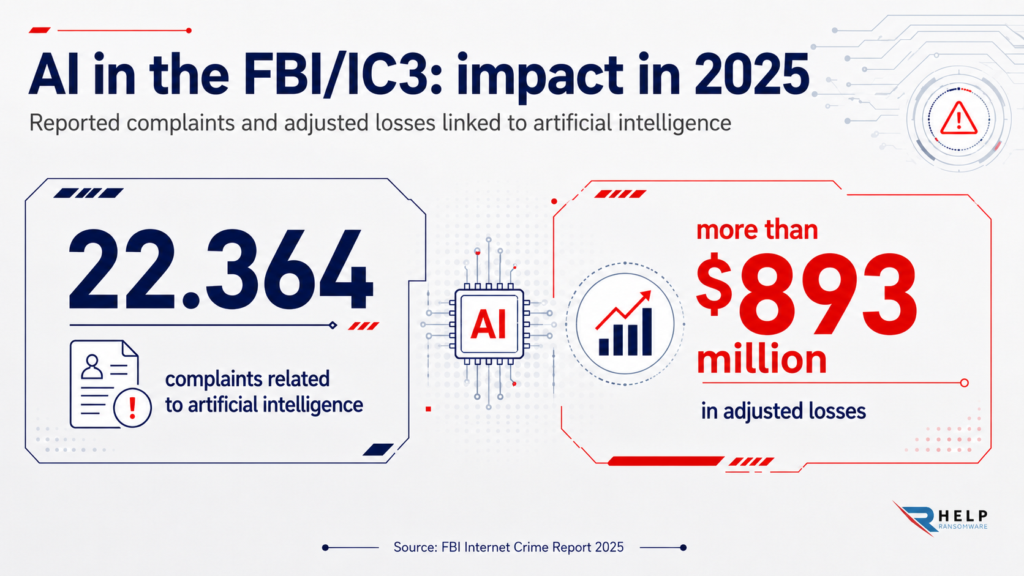
Artificial intelligence has changed how cybercriminals create scams, manipulate images, and pressure victims. What once required prolonged contact, genuine material, or advanced technical skills can now be accelerated through fake profiles, automated messages, identity cloning, and manipulated visual content.
Against this backdrop, sextortion has become an especially serious threat to individuals, minors, professionals, and businesses.
This is not simply an intimate or personal issue: it can also affect an organization’s reputation, digital security, data protection, and business continuity when the blackmail targets employees, executives, or people with access to sensitive information.

Immediate Ransomware Help
Don’t let ransomware hold your business hostage. Our experts are ready to recover your data and secure your systems.
What Is Sextortion
Sextortion is a form of digital extortion in which an offender threatens to publish, send, or distribute intimate content—whether genuine, manipulated, or artificially generated—unless the victim complies with their demands. Those demands may include money, additional images, account access, silence, favors, or further interaction with the offender.
From a security perspective, sextortion should be understood as part of cybercrime that combines social engineering, emotional manipulation, identity impersonation, and the abuse of digital platforms.
The victim has not always shared an image willingly: in many cases, the content may be fake, altered, or created with AI from publicly available photographs.
The FBI defines financially motivated sextortion as a crime in which predators pose as someone else online, coerce a victim into providing intimate images or videos, and then demand money while threatening to share the material with family, friends, or contacts.
The agency also warns that it can happen to anyone and recommends ending contact, preserving evidence, and reporting the incident.
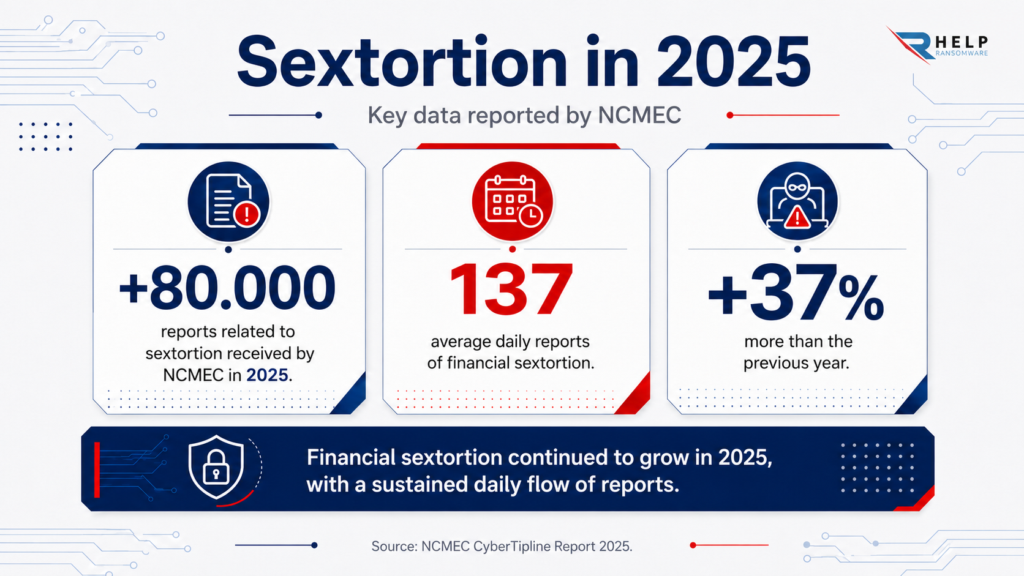
How AI-Powered Sextortion Works
Sextortion often begins with an apparently ordinary conversation on social media, dating apps, messaging platforms, online games, or video-calling services.
The offender builds trust, pretends to be someone of a similar age or with similar interests, and moves the conversation to more private channels. Once they obtain an image, a video, or enough personal information, the threats begin.
AI has changed this dynamic because real content is no longer always required.
Criminals can use publicly available photographs to create fake images, build more convincing profiles, automate conversations, or tailor messages to the victim’s language, age, and circumstances. This increases the speed of the attack and lowers the technical barrier for offenders.
In 2025, NCMEC warned of a dramatic increase in reports involving generative artificial intelligence: between January and June, reports linked to generative AI rose from 6,835 in 2024 to 440,419 in 2025.
The same publication states that criminals are using AI to create explicit images featuring minors’ faces from publicly available photos, without first obtaining genuine intimate content.
Risks to Individuals, Businesses, and Digital Reputation
The impact of sextortion can be devastating. On a personal level, the victim may experience fear, shame, anxiety, or isolation. In a business context, the blackmail may target employees, executives, public-facing professionals, or teams with access to critical information. An attacker can exploit emotional pressure to obtain credentials, money, silence, or internal information.
This type of crime can also compromise business data protection. If the offender threatens an employee and succeeds in getting them to share corporate information, internal screenshots, contacts, documents, or access credentials, the incident is no longer solely personal—it becomes an organizational risk.
Sextortion in the Corporate Environment
In corporate environments, sextortion can be used as a form of social engineering. The attacker is not always seeking a direct payment; they may try to gain access to an account, pressure the victim into sending confidential information, or use the threat as a distraction while preparing another fraud.
For this reason, companies should include this risk in their cyberattack response plan. A sextortion incident may require legal support, digital exposure analysis, internal communications, reputational protection, evidence preservation, and an access review. If credentials have also been stolen or documents leaked, the case must be handled as a security incident.
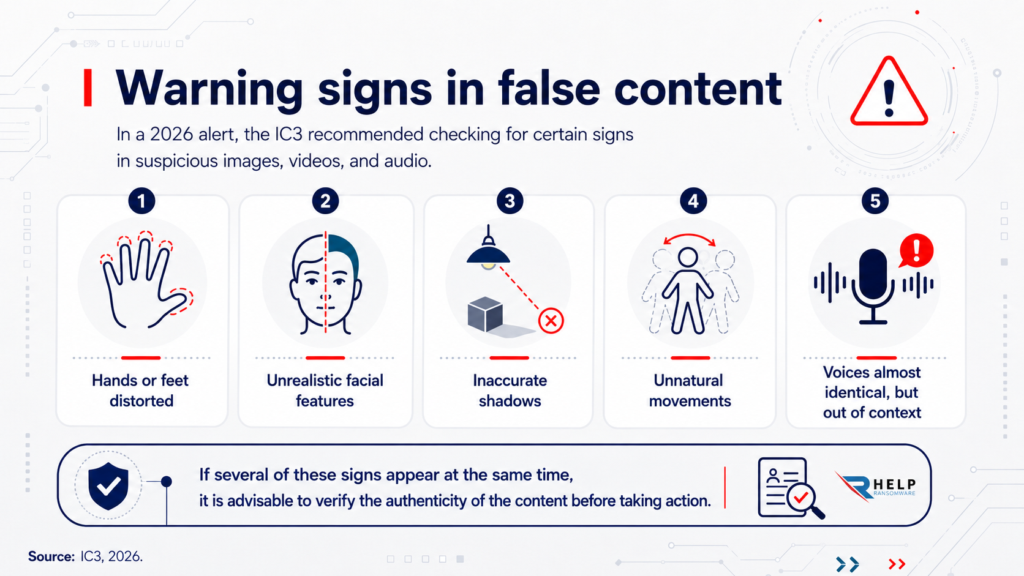
Warning Signs of a Sextortion Attempt
A common warning sign is how quickly a new conversation becomes intimate or persistent. The offender may ask to switch platforms, turn on a camera, send images, or keep the conversation secret. They may also use urgency, excessive flattery, immediate threats, or screenshots of the victim’s contacts to intensify fear.
Another key warning sign is pressure to pay quickly. Many offenders demand bank transfers, gift cards, cryptocurrency, or other payments that are difficult to recover.
The FBI warns that complying with the predator rarely stops the blackmail and that victims should seek help before sending money or more images.
Any message containing supposedly compromising images with visible inconsistencies should also raise suspicion.
What to Do If You Are a Victim of Sextortion
The first rule is not to act in panic. The offender relies on speed, shame, and isolation.
If you receive a threat, end the communication, do not send any more content, do not pay, and preserve evidence: profiles, messages, usernames, links, payment addresses, screenshots, and dates. This information may be useful to platforms, security teams, and law enforcement.
If the victim is a minor or if there is child sexual abuse material involved, the case must be reported immediately to the appropriate authorities. NCMEC also offers the CyberTipline and the Take It Down tool to help remove child sexual abuse images from the internet.
Adults should also report the profile to the platform, strengthen social media privacy settings, change passwords, enable multi-factor authentication, and tell someone they trust.
If the blackmail involves company information, it should be reported to the security team or the appropriate internal contact so that a containment protocol can be activated.

Expert Ransomware Removal
Our certified professionals have over 25 years of experience in ransomware removal, data recovery, and computer security.
How to Prevent Sextortion
Prevention combines education, privacy, and digital security. On a personal level, it is advisable to limit publicly available information, review who can see photos, contacts, and posts, be cautious with new profiles, and avoid moving intimate conversations to unverified channels. It is also important to discuss the risk openly to reduce shame: the offender is at fault, not the victim.
For businesses, prevention should include training on digital extortion, deepfakes, emotion-driven phishing, and the safe use of social media.
Teams must know that they can report an attempted blackmail without fear of retaliation. If an employee expects to be punished, they may hide the incident until it is too late.
Technical safeguards are also advisable: multi-factor authentication, access controls, monitoring for anomalous sign-ins, privacy policies for corporate profiles, and protocols for handling threats against employees.
The goal is to prevent a personal attack from becoming a corporate breach.
Conclusion
Sextortion no longer depends solely on obtaining genuine content. With AI, criminals can manipulate images, create fake profiles, and intensify psychological pressure more quickly. This makes the crime harder to detect, more damaging, and increasingly relevant to both individuals and businesses.
At HelpRansomware, we help organizations and victims respond to digital incidents, protect their information, and regain control when facing extortion, fraud, and cyberattacks.
If you or your company is facing a sextortion case, acting quickly with specialist support can make all the difference.
FAQ
Because it allows attackers to create fake images, more convincing profiles, and personalized messages without possessing genuine intimate content. This increases pressure on the victim and makes it harder to distinguish a real threat from manipulation.
No. Payment does not guarantee that the offender will delete the content or stop contacting you. The FBI warns that complying with the offender rarely ends the blackmail.
No. Payment does not guarantee that the offender will delete the content or stop contacting you. The FBI warns that complying with the offender rarely ends the blackmail.
Yes. If the attacker pressures an employee to provide credentials, documents, internal contacts, or company funds, the case can become a cybersecurity incident.
Save screenshots of messages, the profile name, links, username, contact method, payment addresses, dates, and every threat received. You can then block and report the account on the relevant platform.