
In recent months, the global cybersecurity landscape has become increasingly unstable. Geopolitical tensions and international conflicts are contributing to a growing level of activity from hacktivist groups, cybercriminal organizations, and state-aligned actors that are using cyberspace as a new arena for confrontation.
According to recent analysis published by The Hacker News, more than 149 hacktivist groups have launched coordinated DDoS attacks targeting over 110 organizations across multiple countries. These operations are often driven by political or ideological motivations and primarily aim to disrupt digital services, target online infrastructure, or generate media visibility.
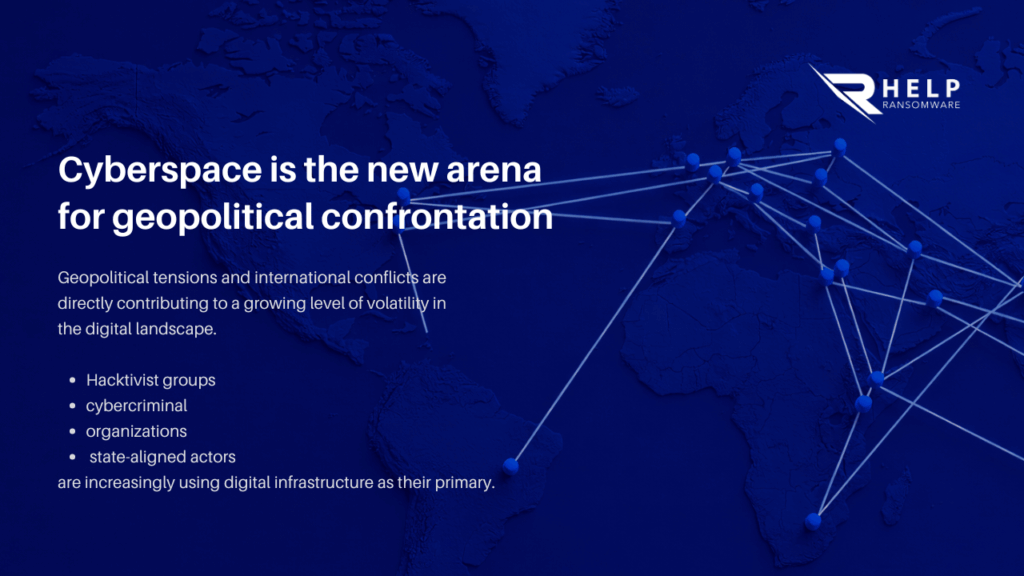
Although DDoS attacks do not directly involve data encryption as ransomware attacks do, they remain a clear indicator of increasing cyber pressure worldwide.
Security Agencies Raise Concerns
Government cybersecurity authorities are closely monitoring this evolving situation. The UK National Cyber Security Centre (NCSC) recently advised public and private organizations to strengthen their security posture following the escalation of the conflict in the Middle East.
According to the agency, geopolitical tensions can lead to a surge in malicious cyber activity, including hacktivist operations, phishing campaigns, and targeted intrusion attempts against digital infrastructure.
In this context, even companies that are not directly involved in geopolitical conflicts can become indirect targets of cyber operations.
When Hacktivism Increases Corporate Risk
Hacktivist campaigns are typically characterized by disruptive actions such as DDoS attacks, website defacements, or digital propaganda operations. However, their activity contributes to an overall increase in instability within cyberspace.
When the number of active threat actors grows rapidly, several risk factors increase simultaneously:
- scanning of digital infrastructures
- unauthorized access attempts
- phishing and social engineering campaigns
- exploitation of unpatched vulnerabilities
This environment can also create favorable conditions for organized cybercrime, particularly for groups specializing in ransomware operations.
From Geopolitical Context to Ransomware
The hacktivist attacks observed in recent months should not be viewed as isolated events. In many cases, they signal a broader increase in malicious cyber activity.
When large numbers of DDoS operations, propaganda campaigns, and hacktivist activities occur simultaneously, what cybersecurity analysts often describe as “operational noise” in the threat landscape increases. This makes it more difficult to distinguish between disruptive activity and targeted intrusions carried out by organized cybercriminal groups.
It is precisely during these periods of instability that many ransomware groups operate more effectively.
Modern ransomware attacks rarely begin with data encryption. Instead, they typically follow a structured attack kill chain, which may include:
- targeted phishing campaigns
- compromise of corporate credentials
- initial access to internal networks
- privilege escalation
- lateral movement within systems
- data exfiltration
Understanding how ransomware attacks develop in their early stages is critical for effective ransomware detection and preventing the attack from progressing to the encryption phase.
Operational and Reputational Consequences
When a ransomware attack successfully compromises a company’s digital infrastructure, the ransomware impact on business can be severe. Beyond the encryption of systems, organizations may face:
- operational downtime
- disruption of digital services
- exposure or theft of sensitive data
- IT infrastructure recovery costs
- legal and regulatory liabilities
In many cases, cyber incidents can also evolve into significant reputational crises, highlighting the cyber risks reputational impact that can damage trust among customers, partners, and stakeholders.
For companies, cyber risk therefore extends beyond IT security alone — it directly affects business continuity and corporate reputation.
Conclusion
The hacktivist attacks observed in recent months are a clear signal of an increasingly unstable cyberspace.
Even when initial operations are not financially motivated — as in the case of politically driven DDoS campaigns — the overall increase in cyber activity contributes to creating an environment that can also benefit organized cybercrime and ransomware groups.
For businesses, this means that cybersecurity can no longer rely solely on prevention. Organizations must also develop effective incident response capabilities, including attack management procedures, intrusion analysis, and data recovery strategies.
When a ransomware attack successfully compromises corporate systems, the ability to quickly restore operations and recover critical information becomes a decisive factor in reducing both financial and reputational damage.
In this scenario, combining prevention with a clear ransomware response strategy — together with cybersecurity awareness and cyber training initiatives such as those promoted by CyberUp Institute — represents one of the key elements for strengthening the digital resilience of modern organizations.