
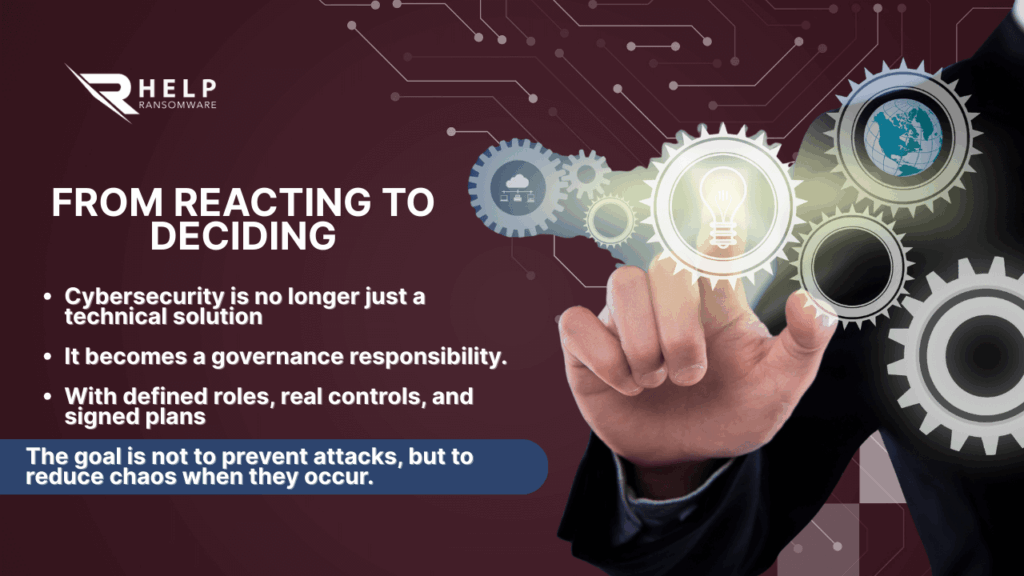
At the beginning of 2026, the European Union published the 2025 Annual Report of the Interinstitutional Committee on Cybersecurity, coordinated by CERT-EU. Beyond simply reviewing the previous year, the document confirms a profound shift in how European institutions understand cybersecurity: no longer as a response to incidents, but as a structural responsibility integrated into governance.
The report covers two years of work under Regulation (EU) 2023/2841 and details how EU entities have had to assess their maturity, define controls, and make formal commitments to cybersecurity. This approach does not eliminate the threat—which remains high—but it does reduce improvisation when attacks occur, especially in the face of persistent risks such as ransomware.
What this document reflects is not a one-off technical improvement, but a strategic decision: to prepare before the incident occurs.
2025 as a turning point: when cybersecurity becomes governance
From a ransomware perspective, this change is significant. Current campaigns don’t succeed because of the sophistication of the malware, but because of accountability gaps, misunderstood dependencies, and delayed decisions. That’s precisely what the European Union is trying to rectify.
From responding to incidents to assuming responsibilities
Assessing maturity, defining responsibilities, establishing tailored controls, and signing off on cybersecurity plans don’t prevent all attacks, but they do reduce chaos when they occur. And that control makes the difference between a manageable incident and a prolonged crisis, as has already been seen in numerous cases most dangerous ransomware attacks.
Here a clear lesson emerges: ransomware is not fought with tools alone, but with a pre-existing structure.
The supply chain as an operational advantage for ransomware
One of the clearest focuses of CERT-EU’s work in 2025 has been the supply chain. Not as a trend, but out of necessity. Ransomware groups have long been exploiting indirect access points: suppliers, shared services, integrators, or third parties with more permissions than necessary.
Indirect access as a real entry point
This pattern explains why we no longer speak of isolated incidents, but of a The ransomware crisis. The attack doesn’t begin when a system is encrypted, but when a dependency is accepted without sufficient control.
Reducing excessive dependencies, evaluating suppliers, and understanding who has real access has become a strategic, not a technical, decision.

Outsource capabilities without losing control
The European Commission’s announcement on The new dynamic purchasing system for professional IT services fits perfectly into this logic.
It’s not about outsourcing responsibility, but about strengthening capabilities within a defined framework. Many ransomware incidents escalate because no one has a clear understanding of access, responsibilities, or boundaries. When control is diluted, the impact multiplies.
The European approach points in just the opposite direction: to collaborate, yes, but without losing visibility or criteria.
Ransomware, data, and the impact that goes unseen until it’s too late
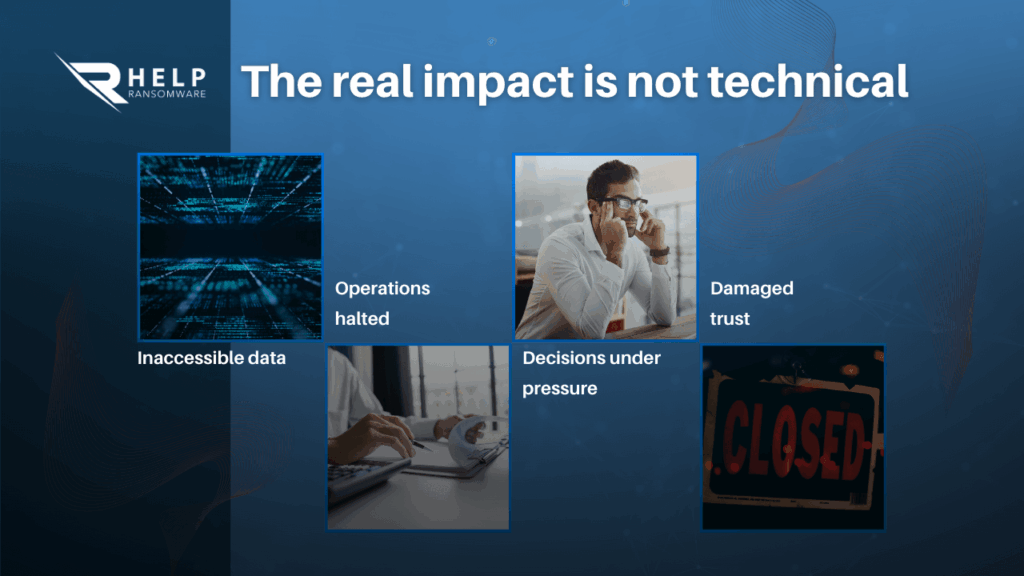
Ransomware doesn’t target systems. It targets impact. And that impact occurs when data is no longer available, intact, or under control. That’s when a technical problem becomes an operational, reputational, or institutional crisis.
That’s why understanding is key The importance of protecting data as a strategic decision. It’s not just about complying with regulations, but about preserving continuity and trust, especially in a context like Europe, as reflected in the analysis of ransomware in the European Union in 2025.
Technology, automation, and a necessary warning
Advanced tools such as Artificial intelligence in cybersecurity adds value, but it doesn’t replace poor decisions. Attackers also automate, analyze, and escalate. The difference isn’t in the available technology, but in who maintains control when something goes wrong.
Conclusion
2025 will not be remembered as the year without attacks.
It will be remembered as the year Europe realized that improvising in the face of ransomware is no longer an option.
The messages from CERT-EU, the IICB report and the decisions of the European Commission all point in the same direction: resilience is built before the incident.
From HelpRansomware’s perspective, the message is clear: ransomware is not fought by reacting better, but by making better decisions.